
How can nurses improve the uptake of childhood immunisations?
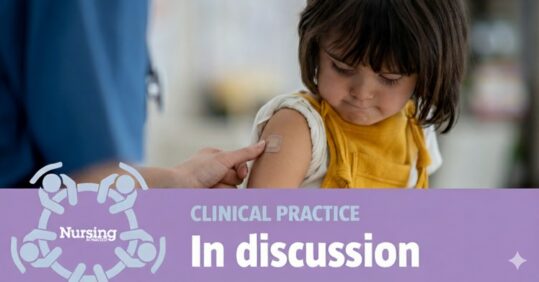


Nurses working in general practice are pivotal to improving the uptake of childhood immunisations. Nursing in Practice hosted a roundtable event to discuss recent changes to the childhood immunisation schedule and how a drop in uptake might be turned around.
Overview of the roundtable discussion
Nursing in Practice’s editor Carolyn Scott joined five nurses from England and Wales in a Nursing in Practice roundtable meeting.
The group discussed current low rates of uptake of childhood immunisations, and the implementation in general practice of significant changes to the childhood immunisation schedule that came into effect in July with further changes in January 2026.
Uptake of all the main childhood booster jabs decreased in England last year.
UKHSA data released in August for England found that almost 1 in 5 children had not received a pre-school booster.
The World Health Organization recommends that at least 95% of children should be immunised for effective coverage. Overall childhood vaccination coverage in England stands at 81.4% and varies significantly by area.
Nurses in general practice are supporting parents to understand changes in the childhood immunisation schedule, including the introduction of an 18-month appointment from January 2026.
The roundtable participants discussed how nursing teams are navigating the new schedule while at the same time encouraging parents to bring in their child for vaccination, and answering their questions where needed.
Advice from nurses will play a significant part in improving the uptake of childhood immunisations, and we hear about some examples of local initiatives in place.
Here are the highlights of the discussion.
Changes to the immunisation schedule
Carolyn Scott: Helen Donovan, please could you summarise the current changes to the childhood immunisation programme in England and Wales and why these have been made?
Helen Donovan This has all come as come about because of the discontinuation of the Hib/MenC vaccine Menitorix and the JCVI (Joint Committee on Vaccination and Immunisation) using that as an opportunity to look at the programme in its entirety and to optimise the schedule.
Meningococcal C is at such a low level that JCVI are fairly confident that the ACYW teenage programme will maintain that protection. But to maintain protection with Hib we need children to get a dose of vaccine in their second year of life – and that has warranted the introduction of an appointment at 18 months. This has also led to changes in the HepB programme, and alongside that, there are changes to the order of the MenB and PCV programme.
So, there’s been quite a lot of changes, but I like to emphasise that schedule changes in vaccination are the norm. When I’m talking to parents about vaccination, I try to explain that we can be confident because we have the JCVI whose remit is to independently review the programme and recommendations. We as nurses can reassure the public that any changes to the schedule have come through that independent body. While we will always have changes to the schedule – because we will see improvements in the epidemiology of the diseases – this is a positive thing as it demonstrates that the vaccines work to reduce the incidence of vaccine preventable diseases.
Implications for the nursing team
Carolyn Scott: What are the practical implications of changes to the childhood immunisations schedule for nurses in general practice and for the rest of the team?
Sharon Traves At first, I found it confusing on what we give and when and where. You’ve got patients coming in and out of clinics, and you’re trying to it figure out. It’s about triple checking. We do have 20 minutes for our appointments now, which is helpful. It’s also not a great time of the year, because we’re already concentrating on flu injections, Covid, shingles and childhood nasal flu. Our childhood immunisation appointment bookings are made centrally, and that can sometimes be difficult if someone needs to change their appointment.
Laura Carnall I think it is quite stressful for practice nurses at the moment with vaccine changes; it’s not just the childhood immunisation changes, but we’ve had changes to the shingles vaccines, and the HPV catch up campaign has kicked in as well, and flu too. So, there’s a lot going on in vaccinations in general.
What we’ve tried to do to mitigate against that is having the new schedules on the fridges themselves. We’re having nurses supported by nursing associates in clinics if possible, so you have two members of staff double checking what’s happening.
On Sharon’s point about appointments, it does seem that the systems for bookings are different everywhere.
Jo Wyndham We have 20 minutes for all our childhood immunisations. That’s how it’s always been, and I’m not sure how we could everything in 10 minutes. A lot of our patients have language barriers, so we make sure that we’ve got enough time for this as well, to have an interpreter on the line or a face-to-face interpreter, which does add even more to the appointment.
So far, it’s been fine with the changes to the schedule; quite straightforward really. I haven’t had any objections to the initial change from parents. We have a template that prompts us; I always put the immunisations on the template beforehand, as a bit of a safety net; it helps me to check that I’m giving the right vaccine at the right time.
We won’t know for sure until the 18-month appointment comes in, but I think potentially it could work well. Some of the feedback we’ve had from parents is that they are worried about lots of vaccines at once. So potentially, it may improve uptake, with spreading things out, and parents won’t feel that the child is being overwhelmed with vaccines. However, the parents will have gone back to work by then, so the practicalities of that might be challenging. We won’t know until we get there really.
We’re a big practice, but for smaller practices, I can see that adding in that additional appointment at 18 months might be a challenge [in terms of workload].
Helen Donovan Nurses are the leaders as far as vaccination is concerned in the UK, but they often don’t get the credit for that. They know the schedule, and they know the families – they will have seen the older children coming in, then the younger ones; they may even see then the grandparents for other vaccines. Vaccination is a really complex space, and to keep on top of all of it is hard.
Nurses will want to look at what works in their local area. It may well be that there is a call for having a different way of setting up appointments, for example. I would always encourage nurses to use their leadership role to be really pushing for what works for them. We really need to be advocating from a nursing perspective, to give us the time and the resources to do all this. It shouldn’t just be an add-on.
I think it’s really great to have nursing associates supporting clinics. Also, to note that it has been RCN guidance to have a minimum of 20 minutes for children’s immunisations appointments for some time now.
Laura Carnall I think you hit the nail on the head with the [appointment] time. If we’re given the time to do things properly in terms of vaccinations, we could get on top of the uptake. I think in general practice, vaccines have often not been a focus, and it’s been more about long term conditions.
I think that if we’re given the time to focus on vaccinations and get it right, then we could see a massive increase in uptake. But it is having the time to do that – to have the conversations with parents, with families, with schools and with communities.
Speaking from our practices in Sheffield – with the ethnic, diverse populations that we have – we have a lot of questions around how Halal the vaccines are; what gelatine content is in vaccines, and we spend a lot of time with patients, just talking them through that, looking at the SPC with them, and reassuring them that there are alternatives that they can have. Definitely, time is key.
Helen Crosby At Aneurin Bevan we absolutely recognise that the time is a factor, and we have an agreement to add another half an hour on to everybody’s clinic. We recognise not every vaccination was affected or impacted by this change, but generally, if they could add on an extra half an hour, either at the beginning or at the end of the clinic, there would be that time for the nurses to go through and familiarise themselves with who on their list would be affected.
We do have a lot of changes in schedules and practice, and nurses manage them incredibly well. But I think the difference in this one is that the IT backup wasn’t there. We are using Consultant Connect so that any practice nurse faced with somebody in front of them and not sure what they need to do would have access to that support.
How can nurses help improve uptake?
Carolyn Scott: How are nurses in general practice and across primary care, impacting childhood immunisations uptake
Helen Donovan Everyone looking at their practice population will have their lists of people who haven’t come in for vaccination. It’s not a new phenomenon, though it’s obviously been compounded by the pandemic, not just with the people’s concerns about vaccination, but also because of access; changes in the way the system is delivered.
When you look at the data, we can see this particular downward trend has been happening since around 2013 and goes back further. We can look at the drop in MMR around 2000/2002, and even further back to pertussis vaccination in the in the late 70s, 80s.
I think we do need to be really cautious that we don’t now lump this all into “people not wanting the vaccines”. Because I think when we ask people that, by and large, it isn’t what the issue is. For example, there’s been some really interesting research recently on having a friendly voice at the end of the phone, so parents feel that they can phone up to make an appointment or to have a conversation. I think there’s lots of things that nurses can do.
I suggest that we probably need two leads [to support uptake]: you need a clinical lead, usually a nurse would be better, but you also need an administrative lead who can run the searches, can produce those lists of defaulters, and can then go through that. Whether it’s half an hour at the end of a clinic, or however you do it, and you go through those individuals, phone them up, talk to them, and make it a friendly and accessible service. The evidence is there that this can improve uptake.
Nurses already know where you maybe need to focus some of your efforts in your local population: whether there’s a traveller group or a particular religious group. Nurses on the ground will know that, and that’s where you can focus.
I think we’re doing ourselves a disservice if we suggest that this [problem with uptake] is a new phenomenon, because it really isn’t.
Jo Wyndham In the last few months, I’ve been given a couple of additional hours a week by our nurse manager to work on the uptake of immunisations.
A colleague had done some work before and found that some parents felt like their children had either had enough vaccines or had distrust in the ingredients. So, we’ve been working on that. I appreciate that I’m lucky in that I’ve been given this time.
Basically, I’ve been having conversations with people. It can be challenging to get hold of some families, of course, especially families where safeguarding is involved. I’ve been taking the time to understand why; and what their real objections are.
For a couple of families who were really adamant they did not want to have the vaccines at the same time, I’ve offered separate appointments.
We’ve used the Oxford vaccine knowledge project website that has readable information around the ingredients of the vaccines, and which is just a little bit more patient friendly.
We might also utilise other agencies, say by mentioning to the health visitor or social worker, to see if they can highlight to the family that we’ve been trying to get in contact with them about their vaccinations.
Though we weren’t far off, we didn’t quite make it with QOF last time, and that’s my point – this work needs dedicated, continuous attention for it to be effective.
Helen Crosby While nurses are absolutely pivotal in immunisation – particularly practice nurses – we don’t work in isolation. Immunisation is everybody’s business; we all have a public health role.
Wherever patients go – into A&E or general practice – somebody should have just a small conversation starter around vaccinations and know where to direct them to. That’s having those wider conversations with our colleagues and wider disciplinary groups, so that we’ve all got a part to play.
We’ve opened a vaccination centre in one of our shopping centres, which is easily accessible on bus routes, just to offer an alternative model. It is working very well for some people. I think we have to recognise that there are a small number of people that are really hard to reach. We have been looking at opening the scope for them; to drop down as many barriers possible, and to give them as many opportunities as we can.
Sharon Traves Our main problem is that the bookings are sent out to parents centrally, whether it’s one they are available to attend or not. If it’s not suitable, they are encouraged to then contact the surgery for another time, but some people just don’t turn up at all. If they don’t attend, we then follow up and contact them to book in another time. I find it a frustrating system.
We are lucky in our practice that most people do come for their vaccines. The ones that are certain they won’t come are asked to sign a refusal form, but we make it clear that they are welcome any time. I generally don’t get many questions about the vaccines – I’ve never been asked what a vaccine contains for example.
I recently had one mother bringing her children in for their pre-school boosters say that she needed to rearrange to a Friday appointment because the nursery refused to have the children the next day after vaccines, because they would have had to have given Calpol. I’d not come across that before – that was a new problem.
Communication with parents
Carolyn Scott: What do we think are the key messages that parents need to receive, and how should those conversations take place?
Laura Carnall The next few months will be busy for practice nurses in terms of vaccinations. We’ve got a host of things happening, with childhood flu and obviously the new changes coming in in January with the 18 months appointment. It is going to be a busy time, and I think nurses need support in this.
In terms of parents, it’s about reassuring them that the changes are not a new thing. We’re always updating and moving on and making improvements and delivering that.
We’re planning lots of things that might help with uptake. For example, we have a smear and immunisations drop-in every week at two of our sites – a nurse is booked out between 11am and 1pm (so it doesn’t clash with school times). Ladies can come and have a smear if they’re due or overdue, and they can bring children for vaccines if they’re due or overdue. It’s about trying to target people who struggle to make appointments or working families.
In October, we’re going to host a Halloween party at a couple of the sites to try and get vaccine uptake up. We’ll get the kids dressed up and make it a little bit more fun! So, they can see that coming to the doctors is not a scary thing.
Jo Wyndham I’ll be taking the time to have those conversations with parents that are less about getting the appointment in and getting the vaccine done, and more about alleviating concerns.
We always tell people when the one-year or pre-school booster is due. Some parents have said they feel their child has “had enough” without appreciating the importance of boosters. I think that if we communicate this at the initial baby appointments, this may help attendance at those later appointments.
We trialled Saturday clinics for a couple of months to see if we could improve uptake, and we’ll maybe look at that again.
Something that I do for my children’s school every year is to go and talk about the role of the nurse. It helps put a friendly face to nursing for very young school aged children. I hope to be doing that again this year.
Sharon Traves I usually allocate extra time on a Friday for ad hoc appointments, and we will usually fit them in somewhere – even if they come late for an appointment. We try to be as flexible as we can.
I should think that the new 18-month appointment will be a bit confusing for some people when they receive the invitation, as they won’t have come across it before. So, we are doing our best to tell them about it now when we see them, so they know what to expect.
Helen Crosbie I don’t think we can underestimate that the strategic direction needs to be clear. In Wales we have the National Immunisation framework, with the six pillars for the things we really need to focus on – knowing that we can’t do everything. Everyone seems to be generally singing from the same hymn sheet, and we know where we need to focus our efforts, which is really important.
Helen Donovan I think it’s interesting that sometimes things work in some areas, and they don’t in other areas. I remember when we introduced HPV vaccine in north London, my colleague just over the border did Saturday morning clinics and they worked a dream. I tried them in Haringey, and nobody came – but evening clinics worked for us.
Nurses know their population, and they also know the infrastructure around them. I think all of these ideas are worth trying, but don’t be disheartened if they don’t work in your area.
Nurses are at the forefront of this. They are the leaders, and they know their population – but they do need support; they need time, and they also need the education. Unfortunately, I still often hear where nurses don’t get access to regular updates and immunisation education – which is a challenge.
Education seems to be something that’s very patchy, certainly in England. You need to give everyone time, but you also need to make sure that they’re knowledgeable. I know many areas that are just not commissioning training or doing the training that they used to.
Thank you to the panel for their involvement. This roundtable was part of the Nursing in Practice How Nurses Count campaign, which is highlighting the role and impact of nurses working in general practice.