NICE guidance on cost-effective compression for venous leg ulcers
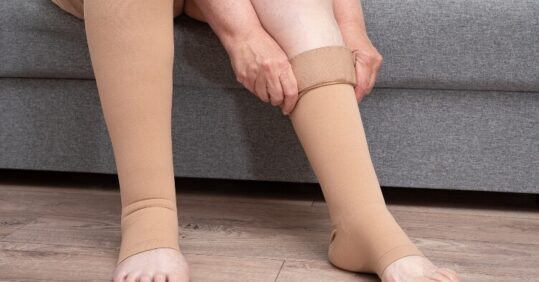


Selection of the most suitable compression product to treat venous leg ulcers should not be based solely on cost, and should be made in consultation with the patient, recommends new guidance from the National Institute for Health and Care Excellence (NICE).
NHS service providers are advised to offer a range of compression products, including compression wraps, which are clinically appropriate and meet the patient’s needs, allowing everyone with a venous leg ulcer to have their preferred dressing.
The NICE health technology evaluation recommends that healthcare professionals consult with patients and consider how the choice of compression product may impact the person’s quality of life.
Related Article: Lower limb care in general practice: ‘It’s about giving people their lives back’
According to the NHS National Wound Care Strategy Programme, venous leg ulcers account for 60 to 80 per cent of all leg ulcers. However, the abundance of different compression treatments makes it difficult for nurses to decide on which course of treatment is most clinically effective and offers the best value to the NHS.
The NICE guidance, known as ‘Compression products for treating venous leg ulcers: late-stage assessment’, is set to change that by providing crucial information to nursing staff on the most effective types of compression.
When deciding with the patient which compression dressing to use, healthcare professionals are advised to consider how the dressing will affect the patient’s ability to complete daily activities, how easily the patient will be able to adhere to the treatment regime, including how their physical health will affect their ability to apply products themselves, and whether they have informal carer support at home.
Additionally, healthcare workers should also consider the patient’s mental health and how the dressing will affect the patient’s overall wellbeing.
Although wound management formulary groups should offer a range of options to suit the needs of different patients, NICE recommends that choices should still be driven by cost-effectiveness and strong evidence of clinical benefit.
The guidance is not intended to limit or restrict product choice but suggests that NHS formulary groups should offer a range of compression products, including bandages, hosiery, and wraps, so that both medical needs and patient preferences can be met.
Related Article: Mythbuster: ‘This patient’s ulcer swab is positive so they need antibiotics’
Where needed, additional items, such as hosiery applicators, bandage overshoes and waterproof bandage protectors, should be offered through formularies or primary care.
NICE has also developed a range of tools and resources to help clinicians implement the guidance, including a cost calculator that enables healthcare professionals to estimate the total cost of using clinically appropriate compression product options, utilising local data to identify and select the most cost-effective option.
Since each patient has different needs, the cost calculator enables healthcare professionals to personalise care plans and determine the most suitable and cost-effective compression product options for each patient.
The guidance, which was informed by decades of work from academics at the University of Manchester, will also help NHS commissioners and procurement specialists provide healthcare professionals with access to a range of the most suitable compression products, ensuring their affordability to the NHS.
Related Article: The role of larval therapy in wound care
Professor Nicky Cullum, one of the lead researchers at the University of Manchester, said: ‘This is the first time there has been a piece of NICE guidance on compression therapy for venous leg ulcers. It feels like a culmination of all the work we have been doing for decades, so we are delighted it has culminated in some national guidance which will help nurses and patients arrive at informed decisions.’

See how our symptom tool can help you make better sense of patient presentations
Click here to search a symptom