Removing triggers ‘key’ to managing atopic eczema
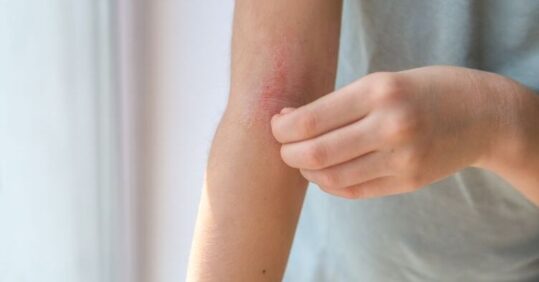


Identifying and eliminating eczema triggers is an essential part of managing the condition, and nurses play a key role in supporting patients with this, a dermatology specialist nurse has said.
‘Removing triggers doesn’t cure eczema, but it can reduce the frequency and the severity of the flares,’ said Fay Penart-Buck, an advanced clinical practitioner at Boroughbury Medical Centre who specialises in dermatology.
Ms Penart-Buck spoke to hundreds of nurses about the management and treatment of eczema at the Nursing in Practice 365 virtual event on respiratory and chronic conditions on 11 February 2026.
She explained that eczema refers to a group of inflammatory skin diseases, noting that it includes seven main types, each containing various subtypes.
‘You can experience more than one type of eczema at the same time or at different times and on different areas of the body. So, diagnosis is key to management,’ she said.
As it is the most common form of eczema, Ms Penart-Buck focused on atopic eczema during her talk.
Triggers
Irritants
She began by detailing the wide range of irritants that can trigger an eczema flare up: ‘Dust, solvents, perfumes, fragrances, detergents, and even something simple like coming into contact with acidic foods.’
Ms Penart-Buck highlighted that most allergens are airborne, with pollen being a major irritant. When the pollen count is high, she suggests simple solutions like ‘drying clothes inside and keeping bedroom windows closed’.
Related Article: Research insights: the latest updates from clinical papers
In relation to irritants, she also addressed excess fabrics, including soft furnishings like cushions, which she says are magnets for dust and pollens. She recommends swapping curtains for wipeable hard blinds and carpets for hard flooring – ‘all of those things will help reduce that burden’.
Similarly, she discussed soft fabric toys belonging to young children. ‘If parents and caregivers pop them in a freezer bag, seal them, and pop them in the freezer once a week, it will kill the dust mites, and that can also greatly reduce their triggers,’ she said.
At the same time, Ms Penart-Buck also emphasised the importance of exceptions and flexibility around certain triggers: ‘Chlorine we know will trigger the skin because it’s alkaline. However, swimming can save a life, and nobody dies from eczema. So, it’s really important to encourage the parents and caregivers to still take children to swimming lessons.’
Antihistamines
Nurses were advised that antihistamines are not as helpful as people think. ‘Because while histamine is involved in eczema, it’s not a histamine-driven condition like urticaria and anaphylaxis.’
The Primary Care Dermatology Society (PCDS) says that non-sedating antihistamines should only be used if there is co-existing hay fever with eczema, and NICE says it should only be considered in cases of severe itching or with urticaria.
In relation to sedating antihistamines, which NICE says can be used at night to help with sleep, Ms Penart-Buck said: ‘First generation antihistamines have a sedative effect, and sometimes we use the antihistamine for that, as opposed to its anti-itch effect, because it aids relaxation.’
Though she warned nurses to be mindful of the sedation properties of the medicine, including the potential for respiratory depression, cognitive impairment and drowsiness.
Coarse fibres
‘Coarse fibres, such as wool and synthetic fabrics, will also trigger eczema, because they’re coarse and they rub the skin,’ noted Ms Penart-Buck.
Additionally, she highlighted that many synthetic fabrics tend to trap heat and trigger itching, while natural fabrics like cotton allow for better temperature regulation and, therefore, reduce itching.
Allergy testing
Ms Penart-Buck noted that allergy testing is a controversial area.
‘Allergy testing is actually more useful for ruling out allergies rather than ruling in, because negative results are about 95% accurate. So, if we test for an allergen and it’s negative, we can be pretty confident that that result is correct, whereas positive results only indicate a sensitisation, not a true clinically significant allergy.’
It is also important to ‘bear in mind that food allergies can change over time, so babies that have cow milk protein allergy or egg allergy can grow out of it. So, it’s quite reasonable to repeat that allergy testing’.
Related Article: Understanding rare diseases and how to support patients with them
Importantly, she added, there is no guarantee that eczema symptoms will improve after removing an allergen, because ‘eczema is multifactorial’.
Bathing
In terms of bathing, Ms Penart-Buck advised that those with eczema should avoid products that ‘smell nice or bubble’ as they disrupt the skin barrier and can trigger a flare up.
The recommendation ‘is for lukewarm water, maximum of 10 minutes, and do all the hard work with emollients.’
She emphasised that recommending bath emollients will help to stop patients using soaps and shower gels that are harmful for those with eczema.
However, PCDS advises careful consideration when recommending emollients for washing in patients with poor mobility, due to the increased risk of slipping in the bath or shower.
Ms Penart-Buck also advised washing hair over the sink or the bath. ‘Because if individuals with eczema stand in the shower and that shampoo rinses down their body, they are rinsing themselves with a really strong detergent.’
Diet and stress
While still in the early stages, Ms Penart-Buck discussed how emerging research indicates that a healthy gut microbiome could be a priority for skin health, with anti-inflammatory diets, probiotics, and prebiotics potentially helping to achieve that.
Similarly, studies show that the brain plays a key role as well, with stress being a significant factor, she says. ‘We knew before that any kind of stress or bereavement would exacerbate any kind of skin condition, but we now think that this plays a much higher role than we originally thought.’
Related Article: Multimillion-pound fund opens for projects aimed at improving men’s health
Ms Penart-Buck predicts that the gut-brain-skin axis will become a prominent feature of eczema management in future. ‘This is something that has been around now for about five years and is coming more and more into play. I suspect that in the next five years, we will see a change in NICE guidelines.’
For nurses seeking to deepen their knowledge of eczema management, Ms Penart-Buck highlighted several organisations that offer valuable resources and support, including the British Dermatological Nursing Group (BDNG) and PCDS.
For patient resources that can help inform consultations, she suggested recommending the National Eczema Society to patients and their families.
We’ve got more exciting events coming up throughout the year, delivering practical clinical updates and expert-led education. Whether you prefer face-to-face or virtual learning, register today to save your free spot and connect with peers. Check out what’s on the calendar and join us at the next one!

See how our symptom tool can help you make better sense of patient presentations
Click here to search a symptom