Severe hair loss treatment approved by MHRA
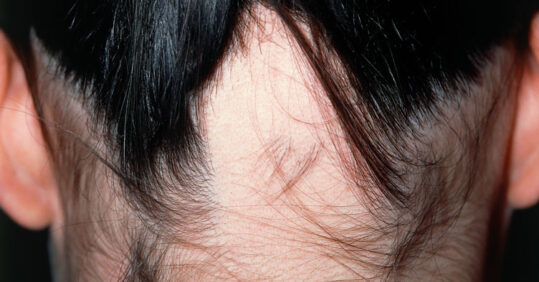


A treatment for severe hair loss, alopecia areata, in adults has been approved by the Medicines and Healthcare products Regulatory Agency (MHRA).
Deuruxolitinib (brand name Leqselvi) was evaluated in two pivotal clinical trials, which studied 1,223 adult patients with alopecia areata who had lost at least 50% of their hair for more than six months. In both trials, it was found to be more effective than placebo at promoting hair growth.
Julian Beach, MHRA executive director, healthcare quality and access, said: ‘This approval gives adults with alopecia areata another potential treatment option to help manage their condition.’
Alopecia UK’s chief executive officer, Sue Schilling, said: ‘It is pleasing to see that another alopecia areata treatment has received approval from the MHRA. Each new approval is an important step forward and helps expand the range of options available to people seeking effective treatment.’
Alopecia areata is a disease where the body’s own immune system attacks hair follicles, causing inflammation that leads to hair loss on the scalp, face and/or other parts of the body.
Deuruxolitinib, which was developed by Sun Pharma UK Limited, works by reducing the activity of enzymes called JAK1, JAK2 and TYK2 relative to JAK3 kinases, which are involved in inflammation at the hair follicle. This reduces the inflammation, leading to hair regrowth in patients with alopecia areata.
In both clinical trials investigating the drug, subjects received either deuruxolitinib 8mg, deuruxolitinib 12 mg, or a placebo twice daily.
After 24 weeks, the patients that received deuruxolitinib 8 mg scored higher on a scale used to measure scalp hair than those that received the placebo.
Deuruxolitinib 8 mg was shown to improve hair growth in subjects with severe alopecia areata, with around 30% of subjects experiencing 80% or more scalp hair after 24 weeks of treatment, and around 23% of subjects experiencing 90% or more scalp hair after 24 weeks of treatment.
The most common side effects with deuruxolitinib, which may affect more than one in ten people, are headache and acne. Mr Beach emphasised that: ‘’Deuruxolitinib can only be obtained with a prescription [and] the recommended dose is an 8 mg tablet to be taken twice a day.’
‘[Furthermore], as with any medicine, the MHRA will keep the safety and effectiveness of deuruxolitinib under close review.’
Moreover, Ms Schilling highlighted that deuruxolitinib still requires approval from the National Institute for Health and Care Excellence (NICE): ‘We hope Leqselvi will now go on to be successfully assessed by NICE so that, in time, it can become available on the NHS.’
‘Access to effective treatments should not depend on whether someone can afford private healthcare, and we look forward to the possibility of this option becoming available to everyone who could benefit from it.’
A version of this article was first published on our sister title, The Pharmacist.

See how our symptom tool can help you make better sense of patient presentations
Click here to search a symptom