
CPD: Prevention of falls in vulnerable people
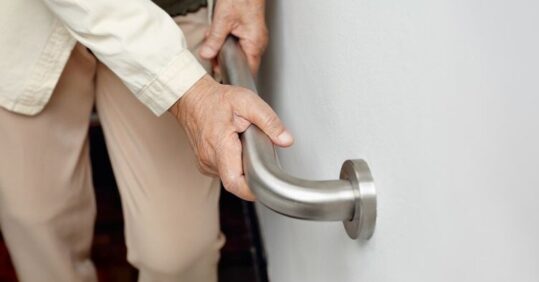


 Frailty nurse specialist Linda Nazarko advises on how nurses in the community can help to prevent falls in vulnerable people, including older people and those with a long-term condition that puts them at risk. Read the full module on Nursing in Practice 365 today.
This module advises nurses working in primary care on the best approach to identifying people at risk and preventing falls in line with NICE guidance on falls prevention.
The article supports readers to understand why certain people are at increased risk of falls and injury when falls occur. It explores risk factors and advises on how these can be addressed or managed.
Learning objectives
By the end of this module, you will have an improved understanding of:
- Why falls occur and their potential consequences.
- Importance of identifying people at risk, addressing risk factors and implementing prevention strategies.
- Key principles in updated NICE guidance on falls prevention, including components of comprehensive risk assessment and management strategy.
- Structured medication reviews in the context of falls prevention.
Why do we need to focus on falls prevention?
It is vitally important that nurses and other healthcare professionals do their utmost to reduce a person’s risk of falls. A fall can lead to injuries, most commonly fractures.
In 2022-23, there were over 200,000 falls-related emergency admissions among older people in England alone, and in 2023 around 70,000 people in England, Wales and Northern Ireland sustained a hip fracture as a result of a fall.1,2
The risk of falls increases with age. Around one-third of people aged 65 and over (about 3 million) fall in the UK every year, and 5,000 older people died in 2017 as a result of a fall.3,4
Spending time in hospital can itself increase the risk of falling. People admitted to hospital are inactive and spend 87–100% of the day in bed or sitting.5 As a result around 40% of older people experience deconditioning, also known as functional decline, when hospitalised.6 This puts them at risk of complications, such as loss of muscle tone,7 continence problems and pneumonia, and increases the risk of falls.
Related Article: Why all GP practices need a learning disability specialist
People can also become fearful after a fall which can lead to them becoming housebound or totally immobile.8
Assessing a person’s risk of falls
Falls can occur as a result of a person’s:
- individual risk factors;
- their environment;
- the quality of care they receive.
Individual risk factors
These include age-related changes such as changes in vision9 and long-term conditions, such as heart failure, arthritis, dementia, stroke, Parkinson’s disease and learning disability.10 These generally become more common as people age; multimorbidity (where a person has two or more long-term health conditions) also increases with age and exacerbates the risk.11 The prevalence of multimorbidity is rising as the population ages, and with growing levels of ill health and long-term conditions in younger people. By 2035 an estimated 2.5 million people are predicted to have four or more long-term conditions.12
Environmental risk factors
Some environments such as hospitals, mental health and learning disability units and care homes are high-risk care environments because people cared for in these settings are particularly vulnerable. Around 25% of people who sustain hip fractures outside hospital are admitted from care homes.13,14 Around two-thirds of those admitted are from residential care homes, with the other third from care homes with nursing (likely to be because people in residential care are more mobile than those in nursing homes).
A person’s home environment can increase the risk of falls. Risk factors include clutter, loose mats, damaged carpet or other floor coverings, poor lighting and unsuitable furniture, such as low chairs.15,16
Most falls occur because of an interaction between the individual’s personal risk factors and environmental factors.
Treatment and care-related risk factors
The level of care and support a person requires – and had access to – is also important. If the person requires help with certain activities of daily living, such as shopping and meal preparation, but does not receive this, they may become malnourished and at increased risk of falls.
The quality of care the person receives also affects the risk of falls. For example, a person receiving multiple medicines that can increase the risk of falls who does not have appropriate medication reviews will be put at increased risk.17
Identifying people at risk
Nurses in the community play an important role in implementing evidence-based approaches to prevent falls in those who are vulnerable.
NICE recently updated guidance on identifying people who have fallen or who are at risk of falls, assessing and addressing risk factors and managing residual risk.10 The guidance applies to people aged 65 and over and also people aged 50-64 with one or more factors that puts them at increased risk of falls, including long-term health conditions that impact on a person’s daily life such as arthritis, dementia, diabetes or Parkinson’s disease; and living with a learning disability.
There is a helpful visual summary that identifies three pathways: a hospital pathway, a residential pathway and a community pathway. The residential and community pathways are relevant to nurses working in the community in primary care, community nursing and care home support teams.
The guidance stipulates that anyone in a residential or hospital setting should undergo comprehensive falls assessment and management.
In the community, NICE advises that nurses should ask people for details about any falls when the person presents after a fall, and at routine appointments, to determine whether they require assessment.
NICE has advised that risk prediction tools should not be used as they are not accurate. However, the NICE criteria for assessment and actions do effectively support a form of risk stratification, with criteria that trigger:
Related Article: Thousands of older people waiting in A&E for up to three days
- a comprehensive falls assessment and management plan;
- an assessment of gait and balance in those who don’t meet criteria for a full assessment and management plan; and
- provision of health and wellbeing information, and advice on physical activity, for those who do meet criteria for full assessment and management and are found not to have gait or balance impairment.
The specific criteria which should trigger a comprehensive falls assessment and management plan in patients in the community are detailed in Box 1.
Box 1: Who requires falls assessment and management
People who have fallen in the last year and meet any of the following criteria:
- Living with frailty (also see section on frailty assessment in NICE multimorbidity guidance).
- Injured in a fall and needed medical (including surgical) treatment.
- Have experienced a loss of consciousness related to a fall (also see NICE guideline on transient loss of consciousness in over 16s).
- Have been unable to get up independently after a fall.
- Have had two or more falls in the last year.
People who do not meet the criteria above but who have fallen in the last year should have an assessment of gait and balance. Those found to have impaired gait or balance should then be offered a falls prevention exercise programme and a home hazard assessment should be considered.
People who have not fallen in the last year, or have had a single fall in the last year but do not have a gait or balance impairment, should be offered health and wellbeing information, and advice on physical activity.
How to carry out a falls assessment
To identify a person’s individual risk of falls, NICE states that a falls assessment should (where appropriate) include the specific assessments/examinations outlined in Table 1 below.10
Table 1. Assessments and examinations to identify individual fall risk factors
| Assessments and examinations | Comments |
| Alcohol misuse | See section on identification and assessment in the NICE guideline on alcohol-use disorders. |
| Cardiovascular examination | Include a lying and standing blood pressure test. Manual most accurate. |
| Cognition and mood | 4AT to screen cognitive impairment. Geriatric depression score mood. |
| Delirium (hospital inpatient and residential care settings only) | Hospital and residential care settings only; see section on assessment and diagnosis in the NICE guideline on delirium. |
| Diet, fluid intake and weight loss | |
| Dizziness: ask about presence and nature | If symptoms of rotational vertigo, see section on dizziness and vertigo in adults in the NICE guideline on suspected neurological conditions |
| Footwear and foot condition | |
| Functional ability: assess the person’s perceived functional ability and explore any concerns about falling. | Functional ability refers to physical and cognitive capabilities to carry out tasks essential for living an independent life. |
| Gait, balance, mobility and muscle strength | If walking aides used check suitability and ferrules. |
| Hearing impairments | |
| Long-term conditions affecting daily life | For example, arthritis, dementia, diabetes or Parkinson’s disease
|
| Medication review | |
| Neurological examination | |
| Osteoporosis risk assessment | See the NICE guideline on osteoporosis: assessing the risk of fragility fracture. |
| Urinary continence | Falls common with urinary frequency, especially at night. |
| Visual impairments | Date of last eye test. Is person wearing glasses when needed? |
A person’s individual risk factors should be promptly addressed with appropriate interventions to reduce their risk of falls, which may involve referral.
Related Article: CPD: Essential tremor – recognition, assessment and management in primary care
Anyone identified as at risk through one or more risk factors should also undergo comprehensive falls management.
Linda Nazarko is a frailty specialist nurse based in London
References
- NICE. New guideline will help cut falls and related hospital admissions for older and at-risk people. April 2025
- Royal College of Physicians. National Hip Fracture Database Annual Report 2024. September 2024
- UK Government. Office for Health Improvement and Disparities. Falls: applying All Our Health. Updated February 2022
- Age UK. Falls later in life: a huge concern for older people. May 2019
- Fazio S et al. How much do hospitalized adults move? A systematic review and meta-analysis. Appl Nurs Res 2020;51:151189
- Kahlon S et al. Association between frailty and 30-day outcomes after discharge from hospital.CMAJ 2015;187(11):799–804
- Agmon M et al. Association between 900 steps a day and functional decline in older hospitalized patients.JAMA Intern Med 2017;177(2), 272–4
- Izadi-Avanji F et al. Fear of falling and related factors in older adults in the city of Kashan in 2017. Arch Trauma Res 2018;7(2):50
- Pezzullo L et al.The economic impact of sight loss and blindness in the UK adult population.BMC Health Serv Res 2018;18:63
- NICE. Falls: assessment and prevention in older people and people 50 and over at higher risk. [NG 249] 2025
- NICE. Multimorbidity: clinical assessment and management. [NG56]. 2016
- Kingston A et al. Projections of multi-morbidity in the older population in England to 2035: estimates from the Population Ageing and Care Simulation (PACSim) model. Age Ageing 2018;47(3):374–80
- NICE. Hip fracture: management. [CG124] Updated 2023
- Barker T et al. Increased 30-day mortality rate in patients admitted with hip fractures during the COVID-19 pandemic in the UK. Eur J Trauma Emerg Surg 2021;47(5):1327–34 https://doi.org/10.1007/s00068-021-01649-5
- NHS Inform. Prevent falls by identifying hazards at home. Last updated 2024
- NHS UK. How to make your home dementia friendly. Last reviewed 2025
- Nazarko L. Can medication increase the risk of falls? The importance of medication review. Br J Community Nurs 2023;28(11): 534-8

See how our symptom tool can help you make better sense of patient presentations
Click here to search a symptom