Seeing and hearing in dementia: a practical framework for GP practices
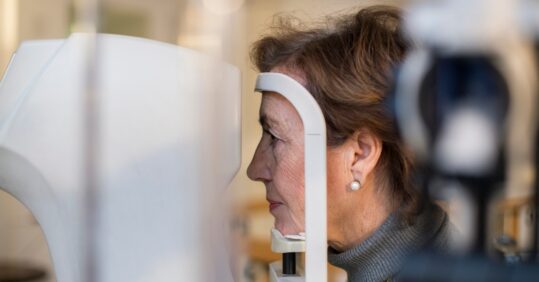


Consultant ophthalmic surgeon Mr Kamran Saha, hearing scientist Dr Rebecca Millman and clinical scientist (audiology) Sam Blakemore explain the importance of early visual and auditory assessment and monitoring in people with dementia, and what GP practices can do to ensure patients receive timely referral and intervention
Untreated vision and hearing loss are potentially modifiable contributors to dementia risk, yet both are frequently overlooked in post-diagnostic care. Embedding simple sensory checks into general practice appointments can reduce falls, prevent avoidable surgical complexity and support independence and healthy ageing.
Dementia care in general practice rightly prioritises diagnosis, medication review and support. Yet two potentially modifiable contributors to functional decline may easily be overlooked: uncorrected vision loss and untreated hearing loss.
The 2024 Lancet Standing Commission on dementia prevention, intervention and care includes both untreated vision and hearing loss among its updated list of potentially modifiable risk factors. This is not an abstract epidemiological observation. Sensory impairment drives falls, social withdrawal, apparent behavioural change and loss of independence – problems that land daily in primary care. Optimising vision and hearing care is practical, low-risk and directly supported by existing NICE guidance.
What the evidence shows
Vision loss and onset of dementia
A meta-analysis of 14 prospective cohort studies involving more than six million adults found untreated vision impairment associated with a 47% increased risk of dementia. Reduced visual input limits cognitive stimulation, increases functional dependence and contributes to social withdrawal, which are each an independent risk factor for cognitive decline. There may also be direct neurological links: the retina is central nervous system tissue, and retinal changes detected by optical coherence tomography are increasingly recognised as potential biomarkers for Alzheimer’s pathology.
Importantly, the evidence suggests the relationship is at least partly modifiable. A large prospective cohort study found approximately a 29% lower hazard of dementia in those who underwent cataract surgery compared with those who did not. A 2024 meta-analysis of 24 studies involving 558,276 participants found cataract surgery associated with a 25% lower risk of long-term cognitive decline. These are observational findings and do not prove causation, but they are biologically plausible and consistent across large populations.
In addition, while the evidence does not currently support delayed dementia onset or progression (although this is proposed by dementia specialists), it is widely accepted that supporting patients with diagnosed dementia to see better has multiple benefits including that they are less likely to have falls and can remain independent longer. Furthermore, identifying the need for cataract surgery at the earliest opportunity, while cognition remains intact, means the procedure (as with other health interventions) is more straightforward and less onerous for the patient.
Hearing loss and dementia
Over half of people aged 55 or older have hearing loss, rising to nearly 80% for those over 70 years old. Systematic evidence from observational studies shows that adult-onset hearing loss is associated with incident cognitive decline, dementia, mild cognitive impairment and Alzheimer’s disease.
Related Article: MenB jab uptake in babies increases but ‘significant’ variation for MMRV, early data shows
The Aging and Cognitive Health Evaluation in Elders (ACHIEVE) trial provides rare randomised-controlled trial evidence that treating hearing loss, including best practice hearing device fitting, counselling and ongoing support, may reduce cognitive decline in older adults who are already at increased risk of cognitive decline, due to factors such as increased age, lower socioeconomic status, other comorbidities and lower baseline cognitive scores. The results of the ACHIEVE trial strengthen the case for routine hearing checks and timely intervention in older adults, particularly those with other dementia risk factors. In practice, this elevates hearing checks from ‘good practice’ to a core component of risk‑reduction conversations, particularly for patients who are at increased risk of cognitive decline.
Age‑related hearing loss can also exacerbate many of the symptoms already experienced by a person living with dementia. When cognitive decline is combined with reduced auditory input, following conversations becomes significantly harder, which can heighten agitation, anxiety, and low mood. Communication difficulties are a major consequence of the interactions between hearing loss and dementia. Both conditions contribute to social isolation and can lead to greater confusion, frustration and disorientation.
It’s important to recognise that hearing loss and dementia share several overlapping symptoms, and this overlap can easily lead to misinterpretation of a person’s cognitive state. Understanding these shared features helps avoid misdiagnosis, prevents unnecessary distress and ensures that treatable hearing difficulties are not overlooked.
NICE guidance: what should already be happening
NICE guideline NG97, on dementia, recommends encouraging an eye test soon after a diagnosis of dementia if one has not been performed recently, and continuing regular eye tests, typically every two years. NICE guideline NG249 on falls identifies visual impairment as a modifiable risk factor in multifactorial falls assessment. In addition, NICE guideline NG77 provides a management pathway for cataracts in adults.
In terms of hearing, the NICE dementia guidance (NG97) recommends assessment and referral where hearing loss is suspected. NICE guideline NG98 on hearing loss highlights that hearing loss and cognitive impairment are common comorbidities and recommends referring adults with diagnosed or suspected dementia or mild cognitive impairment to an audiology service for a hearing assessment. It also recommends referring adults with diagnosed dementia or mild cognitive impairment to an audiology service for a hearing assessment every two years if they have not previously been diagnosed with hearing loss. And NICE guideline NG249 on falls recommends that a hearing assessment should be included in a comprehensive falls assessment.
These recommendations are already in place. The task for primary care teams is to embed them reliably into post-diagnostic dementia care, so they are not left to chance.
A practical framework for primary care teams
- At diagnosis: make sensory checks routine
When supporting a patient following a new diagnosis of dementia:
- Record the date of the last sight and hearing tests. If not within the past 12 months, advise booking an NHS assessment.
- Ask directly about vision or hearing difficulties and whether the patient or family have noticed change.
- If hearing loss or exacerbated hearing difficulties are suspected, exclude impacted cerumen and acute infections as the cause (NICE NG98) and then refer to audiology.
- Document a sensory plan in the care plan, flagging the two-year review date.
- A simple prompt for patients and families can help: ‘Good vision and hearing help people stay independent and healthy for longer. We recommend arranging both checks in the coming months.’
- Ongoing review: every two years, or sooner
Sight and hearing tests should be repeated at least every two years in line with NICE NG97/NG98. Earlier review is appropriate when there are changes in behaviour, function or communication
- Before escalating behavioural medication: check the senses
Before initiating or escalating treatment for behavioural and psychological symptoms of dementia (BPSD), always consider whether deteriorating vision or hearing may be a contributing cause. A person who appears agitated at mealtimes may not be able to see their food clearly. One who has become withdrawn may not be following conversations. One who appears confused in a new environment may be compensating poorly for visual or hearing impairment in unfamiliar surroundings. See box 1 for more examples of red flags for sensory-driven changes.
Box 1. Red flags for sensory-driven deterioration in dementia
- Vision: stops reading, no longer watches television, sits very close to the screen, misrecognises familiar faces, bumps into furniture, drops tablets, confuses colours, finds difficulty locating food on the plate, experiences new apparent visual hallucinations (consider Charles Bonnet syndrome).
- Hearing: frequently mishears or asks for repetition, turns television volume high, appears withdrawn in group settings, becomes more confused in noisy environments, hearing aids prescribed but consistently not worn.
- General: increased falls, new or worsening agitation, withdrawal from previously enjoyed activities, apparent escalation of BPSD symptoms.
Why earlier referral is usually better
Vision
Firstly, it’s important to note that encouraging patients to use spectacles or other vision aides such as magnifiers early in the dementia journey is beneficial. When cognition is still intact, these habits can be established more easily. As cognition declines, the patient is already familiar and comfortable with them.
Cataracts are progressive and will inevitably worsen. Modern cataract surgery is a day-case procedure, typically performed under local anaesthetic, with a very low complication rate. Once completed, it does not need repeating, aside from occasional posterior capsule opacification which is straightforwardly relieved with laser treatment.
The challenge with late referral in dementia is well recognised among cataract surgeons. Qualitative research using structured interviews with senior surgeons highlights the practical difficulties of awake surgery in people with more advanced dementia, including distress, loss of cooperation and the influence these have on anaesthetic decision-making.
The Royal College of Ophthalmologists has published specific practice guidance on managing cataract surgery in patients living with dementia, including peri-operative pathway considerations and consent.
Related Article: Nearly one person a week diagnosed with TB only after death, study finds
In practical terms, earlier referral – while dementia is at an earlier stage – means surgery is more likely to be completed comfortably under local anaesthetic as a straightforward day case. Later referral, when cognitive impairment is more advanced, increases the likelihood that the patient cannot tolerate awake surgery. This can mean sedation, deep sedation or typically general anaesthetic, with substantially greater peri-operative burden, risk and recovery demands in a frail older person.
Where a cataract is identified and is having functional impact, even if mild, early referral is appropriate (although local referral restriction policies may limit this). Do not wait for vision to deteriorate to the point of disability.
Hearing
Behavioural assessment of hearing is easier in the earlier stages of dementia. As dementia progresses, testing can become more challenging and may no longer be possible when dementia is very advanced. If a person with cognitive impairment has regular experience of hearing assessments and the task is familiar to them, this may extend the timeframe during which behavioural hearing testing is achievable.
The uptake and adherence to treatment for hearing loss, including hearing aids, may also be easier in the earlier stages of dementia. If hearing aids are embedded into a person’s daily routine and they can adapt to amplified sound during the earlier stages of dementia, this may help to support hearing aid use as dementia progresses.
Care homes: reviews and referral patterns can vary
There is a common assumption that residents of care homes have their healthcare needs, including vision and hearing, systematically reviewed. In practice, referral patterns vary considerably.
A forthcoming 10-year cohort study from a tertiary ophthalmology unit examining patients with dementia undergoing cataract surgery demonstrates clinically significant variation in severity of visual impairment at the point of referral, particularly among residents from some care homes. This suggests that routine vision checks are not consistently being arranged, or that referrals thresholds vary considerably.
Hearing loss support in care homes is inconsistent, under‑resourced and often improvised. Fewer than half of the care home residents with dementia who would benefit from hearing care are receiving it. Improving hearing support in care homes requires coordinated action across health and social care. Primary care teams are well placed to recognise hearing difficulties in care home residents early and to trigger appropriate hearing assessments and support for residents. Teams can make a positive impact by:
- Checking for impacted earwax (up to 44% of care home residents with dementia also have impacted earwax).
- Helping care home staff with the referral routes to audiology services.
- Sharing as much information as possible with audiology services. For example, document the resident’s cognitive status, how they prefer to/can communicate, or if there is a need for informal caregivers to be present during audiology appointments.
- Recommending domiciliary hearing care for residents with dementia who find attending in-clinic appointments difficult and/or distressing.
NICE NG97 on dementia notes that clinicians should consider referring people who cannot organise appointments themselves. For most care home residents with moderate or advanced dementia, this applies. At every structured care home visit or medication review, make a habit of asking: when was the last eye test? When was the last hearing assessment? If more than two years ago, or if the answer is unknown, initiate action.
The wider benefits of sensory optimisation
Cataract surgery is associated with reduced falls frequency in older adults. Visual impairment, hearing loss and cognitive decline are independent falls risk factors, and their coexistence compounds that risk substantially. Improving sensory function can also reduce carer burden, improve engagement with daily activities, support medication adherence and delay the need for more intensive care.
Related Article: Nurses hope PMOS renaming will provide ‘fresh focus’ on the condition
Box 2. Practical advice for families and carers
- Ensure bright, even lighting throughout the home, particularly in bathrooms and hallways. Nightlights reduce falls overnight.
- Use high-contrast crockery and placemats to help with locating food. Mark step edges with coloured tape.
- Keep glasses clean and stored in a consistent, easy-to-find location. Check that the prescription is still current.
- Check hearing aid batteries regularly. If aids are not being worn, ask why – loose fit, discomfort or excess ear wax are often fixable without specialist input.
- Reduce background noise (television, radio) during important conversations. Speak face-to-face in good lighting rather than raising your voice.
- Attend appointments with the person and share what you have observed at home – your observations are clinically valuable.
- Prompt referral if you notice functional changes: stopping reading, moving close to the television, increasing confusion or withdrawal.
Perhaps most importantly in primary care, addressing sensory impairment can prevent misattribution of symptoms. Withdrawal, agitation, apparent confusion and reduced engagement are common presentations in people with dementia – but any of these may reflect treatable sensory loss rather than disease progression. Reaching for antipsychotic medication before excluding a remediable sensory cause is a clinical risk worth avoiding.
It is worth offering practical tips to families and carers so they can support maintenance of vision and hearing and minimise risks from any impairment, as outlined in box 2 above.
Key messages for clinical practice
- At diagnosis: encourage sight and hearing testing soon after a diagnosis of dementia if not recently done.
- Repeat: sight and hearing assessment at least every two years, or sooner if behaviour or function changes.
- Cataracts: refer early where functional impact exists – do not wait. Earlier surgery means greater likelihood of local anaesthetic, less peri-operative burden.
- Before treating BPSD: always consider whether deteriorating vision or hearing may be contributing.
- Care homes: actively ask about sensory checks at every review – do not assume they are being arranged.
- Families and carers: share practical environmental and communication advice at every opportunity.
Mr Kamran Saha is Consultant Ophthalmic Surgeon at Moorfields Eye Hospital NHS Foundation Trust, London; Dr Rebecca Millman is Senior Lecturer at the University of Manchester; and Samantha Blakemore is Joint Clinical Lead Adult Rehabilitation Services, University Hospitals Sussex NHS Foundation Trust
Sources and further information
- Alzheimer’s Society. Dementia: Reducing your risk
- Cross H et al. Capabilities, opportunities and motivations of staff to provide hearing support to long-term care home residents with dementia. Int J Audiol 2023:1–8
- Cross H et al. Effectiveness of hearing rehabilitation for care home residents with dementia: a systematic review. J Am Med Dir Assoc 2022: 23(3):450–60
- Cross H et al. “We’re just winging it”. Identifying targets for intervention to improve the provision of hearing support for residents living with dementia in long-term care: an interview study with care staff. Disability and Rehabilitation 2024:46(15):3303–13
- Jefferis J. Challenges for the cataract surgeon treating people with dementia: a qualitative study exploring anesthetic choices. Clin Ophthalmol 2014;8:1993–9
- Gutiérrez-Robledo L et al. Effect of cataract surgery on frequency of falls among older persons: a systematic review and meta-analysis. J Ophthalmol 2021;2021:2169571
- Lee C et al. Association between cataract extraction and development of dementia. JAMA Intern Med 2022;182(2):134–41
- Lin F et al. Hearing intervention versus health education control to reduce cognitive decline in older adults with hearing loss in the USA (ACHIEVE): a multicentre, randomised controlled trial. Lancet 2023;402(10404):786–97
- Livingston G et al. Dementia prevention, intervention, and care: 2024 report of the Lancet standing Commission. Lancet 2024;404(10452):572–628
- NICE. Cataracts in adults: management. [NG77] 2017
- NICE. Dementia: assessment, management and support for people living with dementia and their carers. [NG97] 2018
- NICE. Falls: assessment and prevention in older people and in people 50 and over at higher risk. [NG249] 2025
- NICE. Hearing loss in adults: assessment and management. [NG98] 2023
- Royal College of Ophthalmologists. Concise Practice Points. Cataract surgery in patients living with dementia. November 2023
- RNIB. Cataracts and dementia factsheet.
- RNID. Prevalence of deafness and hearing loss.
- Shang X et al. The association between vision impairment and incidence of dementia and cognitive impairment: a systematic review and meta-analysis. Ophthalmology 2021;128(8):1135–49
- Yeo B et al. Association of hearing aids and cochlear implants with cognitive decline and dementia: a systematic review and meta-analysis. JAMA Neurol 2023;80(2):134–41
- Yeo B et al. Cataract surgery and cognitive benefits in the older person: a systematic review and meta-analysis. Ophthalmology 2024;131:974–84
- Yu R et al. Adult-onset hearing loss and incident cognitive impairment and dementia: a systematic review and meta-analysis of cohort studies. Ageing Res Rev 2024;98:102346
- Zhang W et al. Prevalence of visual impairment in older people living with dementia and its impact: a scoping review. BMC Geriatr 2023;23(1):63
A version of this article was first published by our sister title Pulse

See how our symptom tool can help you make better sense of patient presentations
Click here to search a symptom