
Bowel incontinence – management in primary care
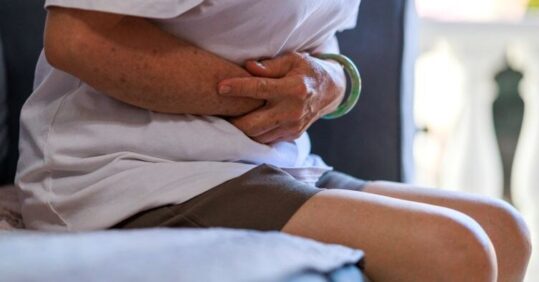


 In the latest in our eLearning CPD module series, specialist bladder and bowel incontinence nurse Sarah Day provides an overview of the principles and practice of bowel incontinence management in the community. Read the full module on Nursing in Practice 365 today.
Bowel or faecal incontinence is the involuntary loss of stool or flatus. It affects an individual’s physical, psychological, and social wellbeing. Prevalence is difficult to estimate as it is often under‑reported due to embarrassment. However, liquid stool incontinence is more common than formed stool incontinence, with rates of up to 60% observed in care/residential homes.
Bowel incontinence is a symptom, but due to embarrassment may not be mentioned by a patient unless directly asked. It requires a holistic approach and assessment. Nurses working in primary care are therefore ideally placed to identify at-risk individuals, promote preventive measures through education and lifestyle advice, initiate treatment or refer to specialist services when required.
Learning objectives
This module will support practice nurses in assessing patients sensitively and provide evidence-based care by:
Related Article: CPD: Pelvic floor dysfunction and urinary incontinence in women
- Understanding the anatomy and physiology of continence.
- Exploring potential underlying causes.
- Identifying red flag symptoms.
- Reviewing management strategies.
Anatomy of bowel continence and defecation
It is important to first review the anatomy and physiology of maintaining continence, to understand the symptoms a patient is experiencing and drive the management plan.
Anal canal and sphincters
Maintaining continence relies on the coordinated function of the internal anal sphincter (IAS), external anal sphincter (EAS), pelvic floor muscles and rectum.
The IAS is:
- Composed of smooth muscle.
- Under involuntary autonomic control.
- Maintains approximately 70% of resting anal tone.
- Provides constant closure of the anal canal.
Damage or problems with the IAS will cause symptoms of passive bowel incontinence, where there is the unintentional leakage of flatus, faeces or mucus.
The EAS is:
- Composed of striated muscle.
- Under voluntary control.
- Contracts during coughing, lifting, or urgency.
- Works with the puborectalis muscle to maintain the anorectal angle.
Damage to the EAS will cause symptoms of urge faecal incontinence where the person experiences a sudden strong urge to defaecate, but is not always able to make it to the toilet.
Pelvic floor muscles
Related Article: Overactive bladder – what nurses in primary care need to know
These muscles:
- Support pelvic organs.
- Maintain continence through tonic contraction.
- The puborectalis sling creates the anorectal angle, which increases resistance to stool passage.
Rectum
- Acts as a reservoir to faecal matter.
- Has stretch receptors to detect filling and trigger the urge to defecate.
- Compliance of the rectum (the ability to stretch) is essential for accommodating stool without leakage.
Physiology of bowel continence and defecation
Maintaining continence is multifactorial, requiring coordination of physical, neurological and functional ability. Not only does it require adequate sphincter function but also adequate stool consistency. Neurologically it requires cognitive awareness and sensation of rectal filling with a coordinated relaxation of the pelvic floor for defecation. Functional ability is having the mobility to reach a toilet in a timely manner.
The recto-anal inhibitory reflex (RAIR) is defined as the reflexive relaxation of the internal anal sphincter in response to rectal distension. This reflex is mediated by the enteric nervous system and is essential for allowing the passage of stool while maintaining continence. If defecation is inappropriate, the external anal sphincter contracts and the stool is returned to the rectum.
Related Article: Lower gastrointestinal symptoms – supporting earlier diagnosis
Complete the full module on Nursing in Practice 365 and log 1.5 CPD hours
Sarah Day is a registered nurse with a diploma in specialist community public health nursing who specialises in urinary and bowel incontinence

See how our symptom tool can help you make better sense of patient presentations
Click here to search a symptom