Health visitor concerns were ‘not taken seriously enough’, Covid inquiry told
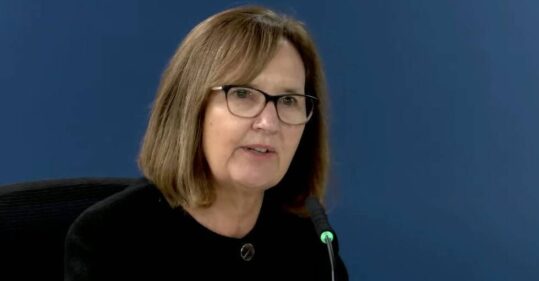


The redeployment of health visitors during the early stages of the Covid pandemic was ‘totally inappropriate’ and meant some children paid ‘the highest price’, an inquiry has heard.
Chief executive of the Institute of Health Visiting (iHV) Alison Morton told the latest phase of the UK Covid-19 Inquiry that the concerns of health visitors about families and children were not ‘taken seriously enough’ and that the significance of their role was not appreciated by powers that be.
Ms Morton was questioned this week about the government’s decision to redeploy some health visitors during March 2020, when the Covid crisis first hit.
Redeployment ranged from zero to 63% across provider trusts, she explained.
‘In about a third of provider trusts, no health visitors were redeployed, but in the rest they were,’ she said.
The average duration of redeployment was just over two months, according to Ms Morton, though she noted there was ‘a huge range’.
Related Article: Research insights: the latest updates from clinical papers
And while the intention was that – as registered nurses – health visitors would go and work in NHS hospitals to support acute healthcare, Ms Morton said some were redeployed to inappropriate roles.
‘We think they were most needed to care for families, but some went off into hospitals to do nursing,’ she said.
‘But the worst thing was some were sent off to do administration, to answer telephones, to deliver parcels of prescriptions.
‘And that really saddened health visitors to know that their families were left behind in huge need, because need soared through the roof, and health visitors were out there doing jobs that could have been managed by somebody else.’
She said it was the view of the institute that it was ‘totally inappropriate’ to deploy health visitors ‘because they were needed most on their own frontline’.
Ms Morton described how key contacts of health visitors with families – such as at six weeks old – were cut and how this meant ‘losing the eyes on those infants… who don’t have a voice’.
‘Who was going to spot babies in distress in their home?’ she said.
‘And that was a key role for the health visitor, which was stripped out and wasn’t really appreciated, I don’t think, or the significance. The protection wasn’t afforded to them.’
Member surveys in the early stages of the pandemic highlighted the serious concerns of health visitors around the struggles families were having.
Related Article: Understanding rare diseases and how to support patients with them
But Ms Morton said ‘that wasn’t taken seriously enough’.
‘It was labelled as anecdotal at the time, so it was a huge mistake. Health Visitors were most needed working with families. Need went through the roof, and we needed to be out there supporting them in this very stressful time,’ she said.
She added: ‘The only service [babies] have is health visitors – that reaches all families – and that was stripped out, and that had a huge cost, and some children paid the highest price.’
The inquiry highlighted the publication of the 2020 Child Safeguarding Practice Review Panel which found that a key factor which increased the risk to children was the impact of adaptions for Covid safe practice, including the use of virtual visits instead of home visits.
The report, published in May 2021, identified a ‘high proportion of cases involving non-accidental injury and sudden unexpected infant death’ of babies under 12 months old.
It points to the replacement of face-to-face visits with telephone or video contact and said a ‘key point of learning was that adaptations for Covid-safe practice in lockdown should maintain at least one face-to-face visit from a midwife and health visitor to families with newborns’.
Related Article: Multimillion-pound fund opens for projects aimed at improving men’s health
Commenting on the review, Ms Morton said it ‘was a serious wake up call, because this was hard, concrete evidence that children were being harmed by these practices’.
The iHV chief executive described instances of ‘catastrophic life ending and life changing consequences’ for children and said the ‘most sad part of this pandemic [is] how we let these children down’.
‘They were the canary in the coal mine, and we needed to listen to them and make their voices count, even in their deaths,’ Ms Morton told the inquiry.

See how our symptom tool can help you make better sense of patient presentations
Click here to search a symptom