New score to help nurses assess and improve inhaler technique
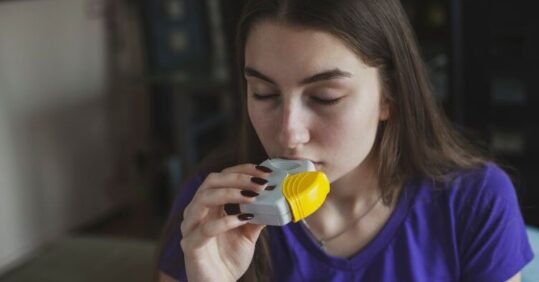


Researchers have developed a new scoring system to help nurses assess and optimise their patients’ inhaler technique.
The Portsmouth Inhaler Technique (PIT) Score includes a checklist of 10 steps in three core areas of inhaler technique assessment – namely inhaler preparation, body and head positioning and medication delivery (inhalation); or the ‘3Ps’: prepare, position and puff.
The researchers, from Portsmouth University, say the score will help nurses to assess inhaler technique more objectively, enabling them to focus on specific areas the patient needs most help with.
The team is now working with local ICB respiratory leads to implement the score in clinical practice, with a view to rolling it out nationally in future.
Related Article: Targeted COPD testing proposed as part of NHS lung cancer checks
The PIT Score checklist includes steps such as: opening, holding and loading the inhaler correctly (prepare); standing or sitting upright, breathing out as far as possible and achieving a good seal with the mouthpiece or spacer mask (position); and breathing in with one quick or slow and deep breath (dependent on the device type), breath holding for 5-10 seconds and breathing out calmly (puff).
Patients are awarded a score of ‘1’ when a step is completed correctly, or ‘0’ if the step is not completed correctly. Steps receiving a score of ‘0’ highlight the need for targeted re-education by the nurse; a full score of 10 indicates optimal inhaler technique.
Importantly, the score has been developed for assessment with all device types, in both adults and children. For example, the ‘breathe in’ step includes different methods depending on whether a dry powder or metered dose inhaler is being used, or if using a spacer device with the single or multiple-breath technique, such as in children.
The checklist also includes items on ‘pre‘ and ‘post’ inhaler use that are considered good practice in assessment of inhaler use, including aspects such as ensuring the patient understands how the medication works, checking the expiry date and that there are doses in the inhaler (if possible) before use, and rinsing the mouth with water, if required, after use.
To develop the score, the researchers first conducted a systematic review of the literature to identify published inhaler technique checklists, generating a list of 72 aspects of inhaler technique assessment, comprising 44 items and 28 terminology variants.
A panel of inhaler experts then undertook a three-round Delphi study to identify the most essential of these items; a separate expert panel assessed these for relevancy to further refine the list. A third panel, including inhaler experts, non-specialists and inhaler users then assessed the remaining items for clarity, to ensure that each item was easily understood. This in-depth process resulted in the final 10 steps included in the PIT Score.
Related Article: How can you persuade this patient to give up their salbutamol inhaler?
Lead author Ruth De Vos, a specialist respiratory physiotherapist in Portsmouth, told Nursing in Practice the PIT Score could be used at annual respiratory reviews and patients’ total scores compared between visits, with the aim of maintaining as high a score as possible.
Ms De Vos explained: ‘Inhalation errors are commonplace, and inhaler technique has been getting worse over the years. There is a lack of standardised advice regarding inhaler technique assessment and optimisation available to healthcare professionals, which can be confusing.
‘The PIT Score is therefore the first validated tool in the UK to quantitatively measure inhaler technique across device types and age groups using a standardised checklist.’
She added: ‘The PIT Score enables healthcare professionals to identify which technique errors need to be improved to optimise technique. This will improve the quality of patient care and support clinical decision-making, and ensure the inhaler device is suitable for the user. The PIT Score has been validated and also assessed for reliability, and there are now plans to implement the PIT Score in clinical practice nationally.’
Related Article: Chronic disease management: ‘Patients don’t necessarily ever need to go and see a GP’
The research was presented at the recent Primary Care Respiratory Society annual conference, where it was awarded ‘Best scientific research abstract’.

See how our symptom tool can help you make better sense of patient presentations
Click here to search a symptom