Over one million switched to combined asthma inhalers since NICE update
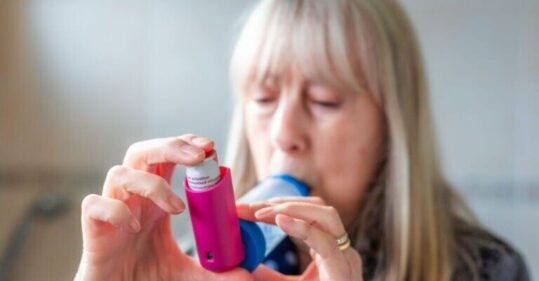


More than a million patients with asthma in England have been switched to a combination reliever inhaler containing an inhaled corticosteroid since updated NICE guidance was introduced, figures show.
It means that for the first time, the number of patients prescribed the combined option has overtaken those still relying on a short-acting beta agonist (SABA) alone.
NICE said the shift was a ‘quiet revolution’ in how asthma care is being delivered.
The long-awaited updated joint NICE, British Thoracic Society (BTS) and the Scottish Intercollegiate Guidelines Network (SIGN) guidance was published in 2024.
The guidance emphasised that GPs and other health professionals should ‘always prescribe maintenance or combination treatments’ rather than the ‘familiar blue “reliever-only” inhaler, when asthma is first diagnosed’ in patients over the age of 12.
Overuse of SABA inhalers has been linked to a higher risk of attacks, hospital admissions and death.
Related Article: MenB jab uptake in babies increases but ‘significant’ variation for MMRV, early data shows
Nearly half of all SABA inhaler users in England (48%) were prescribed more than two in 2024/25, a level that specialists consider a warning sign, NICE said, because it suggests their condition is not well controlled.
The shift towards patients using the AIR (anti-inflammatory reliever) and MART (maintenance and reliever therapy) was already under way before the guideline was published, but figures show it has accelerated considerably since, NICE added.
Around 1.09 million people were using AIR or MART inhalers without any SABA inhaler between October and December 2025 – a 63% increase compared with the same period the previous year.
In contrast, around 800,000 people were using a SABA inhaler without any combination inhaler, a 16% decrease from the previous year, prescribing data shows.
Dr Amina Al-Yassin, a GP and clinical lead for children and young people’s services at Brent Integrated Care Partnership said SABA inhalers make people feel better ‘but only briefly’.
‘We now know that over time they are likely to make asthma worse. Seeing a blue inhaler used alone is now a dangerous sign to me.’
She added there had been a ‘big attitude shift’.
‘The NICE guideline gave us the confidence we needed to strongly recommend this change to our patients.’
NICE has estimated that for every 10,000 people switching to MART inhalers there would be 1,133 fewer GP visits and 144 fewer trips to A&E every year.
Related Article: Nearly one person a week diagnosed with TB only after death, study finds
‘This is a life-saving cultural shift in asthma care. With continued support for patients, we can further reduce preventable attacks and improve lives.’
But for some patients who have relied on their blue inhaler for many years, its use has become deeply ingrained and can be hard to let go, experts admit.
It will take time and a consistent, repeated message across all services to address as well as helping patients to understand the benefit, NICE noted.
A small number of people may not tolerate the switch, and patients do need to be supported and reviewed to support changing a medicine, the guidelines state.
Dr Al-Yassin added: ‘There is a lot of misleading content on social media about the risks of the long-term use of steroid inhalers. These claims are usually exaggerated, and the risks of avoiding treatment are far more serious.’
Dr Sunil Gupta, GP clinical advisor at NICE said the guideline had marked a real turning point for asthma care.
Related Article: Nurses hope PMOS renaming will provide ‘fresh focus’ on the condition
‘Seeing more than a million people already using these new inhalers is genuinely encouraging.
‘We know change takes time, but the direction of travel is right.’
A version of this article was first published by our sister title Pulse

See how our symptom tool can help you make better sense of patient presentations
Click here to search a symptom