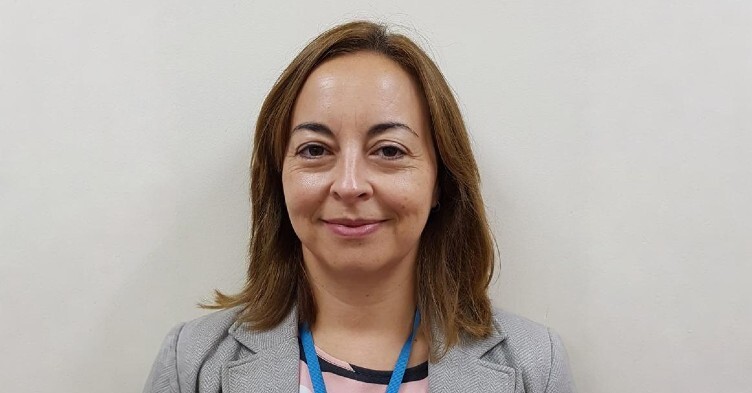
Interview: Nurses urged to have ‘a lower threshold’ for thinking about syphilis
With syphilis at its highest rate since the 1940s and gonorrhoea edging toward being untreatable, Helen Fifer, consultant microbiologist with the sexually transmitted infection (STI) team at the UK Health Security Agency (UKHSA) describes the shifting STI landscape and explains what the latest data means for those on the front line of care.
Cahal McQuillan (CM): Could you tell us a little bit about your role at the UKHSA?
Helen Fifer (HF): I’ve been a consultant microbiologist in the STI team for the last 10 years. I work across the STI reference laboratory, [which does] all the laboratory work to detect STIs.
Additionally, I work alongside the epidemiology team, so I lead some of our surveillance programmes looking at antimicrobial resistance (AMR) in STIs. I focus on bacterial STIs, so the AMR programmes around gonorrhoea and Mycoplasma genitalium, but also around things like syphilis, congenital syphilis, and any other bacterial STIs that we get worried about.
I also work with British Association for Sexual Health and HIV (BASHH), which writes all the management guidelines.
CM: The latest UKHSA data show some encouraging falls in gonorrhoea and chlamydia diagnoses in 2024, but syphilis cases continue to rise, with diagnoses increasing by 5% to about 13,000 in 2024. Can you provide an overview of the STI picture in England right now — are we making progress, or is the situation getting worse?
HF: There are many complex factors influencing STI transmission, and there are very different populations affected. So, you do need to look very carefully at where the diagnoses are being made and in which groups.
In terms of gonorrhoea and chlamydia, the drops are an encouraging trend. But this is the first year we’ve seen a drop, so we’d like to see that continue before we’d say things are definitely going in the right direction.
With syphilis, we’re not seeing the right trend. Overall, there are small increases year on year, but we’re still at the highest rate since the 1940s. Although [rates] are currently looking fairly stable in men who have sex with men (MSM), we’re definitely seeing increases in heterosexuals, which is a newer trend. If you look at the last 10 years, diagnoses in heterosexual men have doubled and diagnoses in heterosexual women have tripled.
Having said that, most syphilis diagnoses — around two-thirds — are in MSM, who are disproportionately affected. So, it’s not that we’re taking our focus off MSM, but the biggest rises are in heterosexuals, which is a very worrying trend.
A lot of people still think of syphilis as being a Victorian disease and don’t think it could be affecting them today.
Related Article: UKHSA issues ‘urgent’ public health notice for nurses on Ebola outbreak
CM: Why do you think STI numbers have risen for conditions like syphilis, while at the same time there have been decreases in conditions like gonorrhoea and chlamydia?
HF: The difficulty with syphilis is that a lot of people might not recognise symptoms or may not think they’re at risk. Therefore, [they don’t] get tested, which allows onwards transmission. A lot of people still think of syphilis as being a Victorian disease and don’t think it could be affecting them today. Likewise, a lot of clinicians are also not aware that syphilis is on the rise and could be affecting anyone.
CM: What can you tell me about the new three-year syphilis action plan?
HF: The syphilis action plan aims to reverse the current trend in increasing syphilis diagnoses, reduce the harm from syphilis and to eliminate congenital syphilis – focusing on people with the greatest need who might be experiencing the greatest barriers to testing and treatment.
CM: Syphilis is sometimes called ‘the great imitator’ because of its varying presentations. What are the clinical red flags that primary care professionals most commonly miss?
HF: [In terms of symptoms], people might think there would be a genital ulcer – and that could be the case. But typically, the primary ulcer isn’t painful, so people might not notice it, and it will go away on its own. So, someone can present without ever mentioning an ulcer, because they either missed it or it has resolved.
People may then present with what we call secondary syphilis, when it progresses to a more systemic, body-wide infection. This can include something that looks like glandular fever, so a body-wide rash that’s typically non-itchy, maculopapular, and classically affecting the palms of the hands and soles of the feet, but not always.
And then there can be other quite different symptoms like alopecia or patchy hair loss; hearing loss; generalised body aches and pains; fevers; or abnormal liver function tests picked up on routine bloods.
Any of these things can be caused by syphilis – which is why ‘the great imitator’ is such a fitting description.
We’re trying to raise awareness of what we’re calling ‘negative now’.
CM: Congenital syphilis cases have risen from just one case in 2015 to 13 in 2023. Does this increase concern you, and what can primary care workers do to help reduce these numbers?
HF: Yes, the rise in congenital syphilis is a real concern. It is a completely preventable and treatable infection. If you pick it up in time and treat the woman more than four weeks before delivery, you can prevent the baby from getting syphilis.
[What’s more], that figure of 13 cases in 2023 will actually rise further, because there is a delay in detection and reporting. The numbers are still very low, but in the UK we shouldn’t be seeing any, because we have an excellent antenatal screening programme with excellent coverage – over 99% of women are tested for syphilis at booking in the first trimester.
What we’ve noticed among the cases we have picked up is that about half are born to women who were engaged in antenatal care, had a negative screening test when they booked, and then acquired syphilis later in pregnancy.
We’re trying to raise awareness of what we’re calling ‘negative now’. Unlike, for example, an anomaly or Down syndrome screening result where a negative means you don’t have the condition, with infectious diseases, you’re only negative at the time of the test and can still acquire the infection later.
We’ve seen examples of women presenting with rashes, swollen lymph nodes or ulcers during pregnancy, where syphilis wasn’t thought of – often because the clinician knew she’d already been tested early in pregnancy. So, it’s about raising awareness of doing that repeat test.
CM: BASHH published the UK’s first national guideline on DoxyPEP for syphilis prevention in June 2025. Can you tell us more about DoxyPEP — what is it, and who is it for?
HF: DoxyPEP is when you take a single dose of doxycycline – an antibiotic – within 72 hours of sex. This has been shown in randomised controlled trials to have a dramatic effect on syphilis, with around a 70-80% reduction in those trials. So, this is a really exciting tool for reversing the trend we’re seeing with syphilis.
In England, it also has an effect on chlamydia and, to some extent, gonorrhoea, depending on the setting, though we do have a lot of resistance to doxycycline in gonorrhoea so it probably wouldn’t work for that.
Related Article: Hierarchy of harm: nicotine alternatives in a post-tobacco era
On syphilis specifically, we’re recommending it for people at higher risk. In the trials, there was evidence for its use in MSM and transgender women, so that’s the primary recommendation in the BASHH guidelines, which need to be evidence-based.
[Importantly], DoxyPEP isn’t a single standalone intervention – it’s part of a broader package of sexual health [offered at sexual health clinics], including regular testing, condoms, HIV PrEP if appropriate, and so on.
DoxyPEP isn’t a single standalone intervention – it’s part of a broader package of sexual health
CM: Ceftriaxone-resistant gonorrhoea cases have risen from around two per year in 2021 to two per month in 2024, with most cases linked to travel to the Asia-Pacific region. What should primary care clinicians do if treating a patient who has returned from travel with suspected gonorrhoea?
HF: In short, refer to a sexual health clinic. Ceftriaxone is our last-line antibiotic for treating all patients with gonorrhoea, and in the Asia-Pacific we’re seeing resistance rates of around 20-30%. In England, we have very few such cases and we’re trying to keep it that way.
Asking about travel is one of the first things we want to know, to try and establish whether a case has come from one of those high-risk countries or has been picked up in England. If we identify resistance, we [at the UKHSA] make particular efforts in partner contact tracing to try and control any spread.
CM: How close are we to a form of gonorrhoea that is untreatable, and what is the contingency plan?
HF: Ceftriaxone is both the first-line and last-line treatment – we don’t have other antibiotics routinely available to treat all patients, which is why this is so worrying.
Having said that, ceftriaxone is a very good drug and when we give it in quite a high dose – in injection form rather than tablet – most cases with ceftriaxone resistance tend to clear, which is a slightly difficult concept to explain, but is currently a positive finding.
Gonorrhoea throat infections are often harder to treat [than those found elsewhere in the body], and we have had some treatment failures there, which is why it’s really important to remember to take throat samples. In those cases, we’ve had to use other antibiotics, sometimes via intravenous drip over multiple days. These are antibiotics we really want to keep in reserve for severe infection.
The good news is that there are two new antibiotics in tablet form that have had successful clinical trials and have just been licensed by the US Food and Drug Administration. But we need to be very careful about how we start using them, because we’ve seen time and again that when we introduce a new class of antibiotics for gonorrhoea, we develop resistance and lose it, then move on to the next one. We finally have two new options, which is brilliant, but we need to be careful not to repeat the mistakes of the past.
We want clinicians to have a lower threshold for thinking about and testing for syphilis.
Related Article: New ‘life-extending’ drug for ovarian cancer added to NHS
CM: If you could give one concrete, actionable message to a community or practice nurse reading this interview, what would it be?
HF: Number one is to say, syphilis is back. It’s not a Victorian disease, and you can’t really predict, based on any particular risk factors, who might have it. Obviously two0thirds of cases are MSM, but a third of cases now are not, so it’s not just gay men. We want clinicians to have a lower threshold for thinking about and testing for syphilis.
And in general, promote condom use and STI testing, and signpost patients to sexual health services, where other interventions are also available such as HIV pre-exposure prophylaxis (PrEP) and DoxyPEP.
This article was first published by our sister title The Pharmacist
See how our symptom tool can help you make better sense of patient presentations
Click here to search a symptom