UKHSA to support pandemic vaccine reforms and expand community delivery


The UK Health Security Agency (UKHSA) will carry out work to strengthen the UK’s pandemic preparedness, vaccine delivery and antimicrobial resistance (AMR) response over the next 12 months, according to a ministerial letter setting out priorities for the year ahead.
Ashley Dalton MP, parliamentary under secretary for health and social care, has written to the UKHSA chief executive Professor Susan Hopkins outlining areas where the agency is expected to provide support and operational leadership.
The UKHSA’s vaccination work will include providing system clinical leadership through the national immunisation network, developing guidance for immunisation programmes, and supporting public and patient-facing communications to encourage uptake.
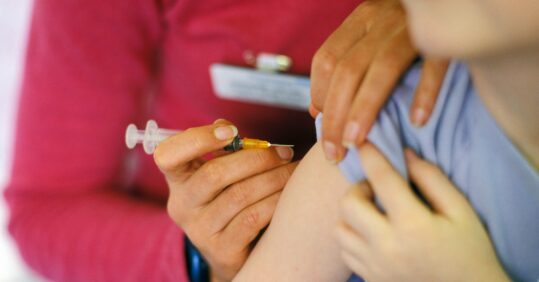
It will also work to evaluate how immunisations can be delivered by health visiting teams and community pharmacies, to help determine what works best and how these services could be expanded.
Related Article: MenB jab uptake in babies increases but ‘significant’ variation for MMRV, early data shows
As part of the government’s pandemic preparedness strategy, the UKHSA will support work to reform the national pandemic flu service, including scoping options to improve medicine distribution capability in response to health security threats.
The agency will also work with the Department of Health and Social Care on vaccines and therapeutics policy, including supporting the completion of the UK-wide respiratory pandemic response plan and developing adaptive and scalable capabilities in diagnostics, surveillance, ports and border health, and communications.
Internationally, the UKHSA will act as the domestic secretariat in support of the Department of Health and Social Care for the 100 Days Mission, a global effort to develop vaccines and treatments within 100 days of a future pandemic threat.
Domestically, it will also help design and deliver Exercise PEGASUS, a pandemic preparedness exercise involving government and the health and care sector.
Procurement, storage and distribution of vaccines for national immunisation programmes will continue under the UKHSA’s remit.
Part of this work includes managing the Moderna UK strategic partnership, a contract that will bring scalable mRNA vaccine manufacturing to the UK for the first time and secure over £1bn in research and development investment.
Related Article: Nearly one person a week diagnosed with TB only after death, study finds
The partnership is intended to strengthen the UK’s resilience to future health emergencies.
The UKHSA will also support government efforts to raise overall vaccine uptake towards levels recommended by the World Health Organization.
Under the UK’s five-year action plan on antimicrobial resistance (2024-29), the UKHSA will strengthen surveillance and infection prevention systems and support international collaboration on outbreak response.
The agency will also contribute to the government’s HIV action plan for England, support national and local efforts to reduce harm from sexually transmitted infections, and provide advice on eliminating viral hepatitis as a public health threat in England by 2030.
It will also deliver policy recommendations to support the development of the tuberculosis action plan for 2026 to 2031 and address rising TB rates.
Related Article: Nurses hope PMOS renaming will provide ‘fresh focus’ on the condition
Preparing for emerging infectious diseases and maintaining the ability to respond to chemical, biological, radiological and nuclear incidents remain core responsibilities.
Last month, a national inquiry into the Covid-19 pandemic suggested the former government’s response was too delayed and that early inaction meant mandatory national lockdowns were ‘the only viable option’.

See how our symptom tool can help you make better sense of patient presentations
Click here to search a symptom