New ‘life-extending’ drug for ovarian cancer added to NHS


A new ‘life-extending’ drug has been added to NHS treatment for hard-to-treat ovarian cancer, NHS England (NHSE) has confirmed.
Hundreds of women could benefit from the drug – mirvetuximab soravtansine (Elahere) – which is the first new treatment addition in over 20 years.
It will be offered to patients living with ovarian cancer whose disease has stopped responding to standard chemotherapy.
According to NHSE, ovarian cancer is one of the leading causes of death from gynaecological cancer worldwide. In the UK, there are around 7,500 new diagnoses each year.
Related Article: TikToks promoting ‘dangerous’ sunscreen misinformation attract more engagement
Standard treatment for ovarian cancer typically involves surgery and chemotherapy, but around 80% of patients with advanced disease relapse and develop resistance to chemotherapy.
However, the new drug combines a ‘homing’ antibody with a ‘cancer-killing medicine’, often described by scientists as a ‘biological missile’ or ‘trojan horse’ therapy.
It works by attaching to ovarian cancer cells that have a protein called folate receptor alpha (FRα) on their surface, before releasing a cancer-killing molecule which destroys the cell from within.
Eight NHS hospitals were involved in a global clinical trial which revealed the treatment delayed cancer progression and prolonged survival, with patients living 16.5 months on average compared to 12.8 months with chemotherapy.
More than a third of patients (37%) also saw their tumours shrink by at least 30%, compared to 16% with chemotherapy in trials.
Following a recommendation by the National Institute for Health and Care Excellence (NICE) this week, the treatment will be available for patients with epithelial ovarian, peritoneal or fallopian tube cancer that has become resistant to platinum-based chemotherapy and whose tumours contain the FRα protein the drug targets.
Related Article: Nursing in Practice returns to Scotland with CPD event this September
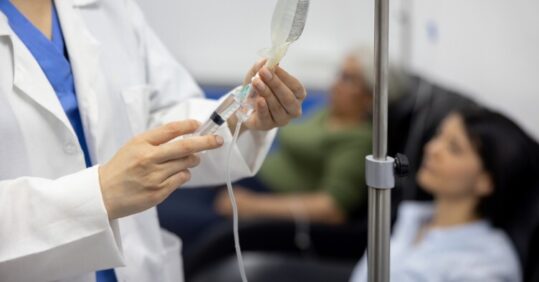
The treatment will be given intravenously over two to four hours, once every three weeks. NHSE said it could also have ‘more tolerable side effects’ than traditional chemotherapy.
It is estimated that up to 400 patients in England each year could benefit.
Minister for public health Sharon Hodgson said: ‘This is an important moment for hundreds of women with ovarian cancer and a testament to our commitment to getting the most promising treatments to NHS patients as quickly as possible.
‘Critically, [this] decision means that patients will have a better quality of life than they otherwise would.’
Related Article: Hierarchy of harm: nicotine alternatives in a post-tobacco era
NHS national clinical lead for cancer drugs Professor Ruth Plummer added: ‘This represents the most significant breakthrough in NHS treatment for these hard-to-treat ovarian cancers in over two decades and we’re delighted it will now offer hundreds of women much-needed hope of precious extra time with their loved ones.
‘It is part of a growing wave of more targeted cancer therapies which, by homing in on specific features of cancer cells, are helping us improve patients’ lives.’

See how our symptom tool can help you make better sense of patient presentations
Click here to search a symptom