‘A celebration of primary care nursing’: Nurse of the Year reflects on award win


This article forms part of the How Nurses Count Campaign, which highlights the expertise, impact and leadership of nurses working in general practice and community settings.
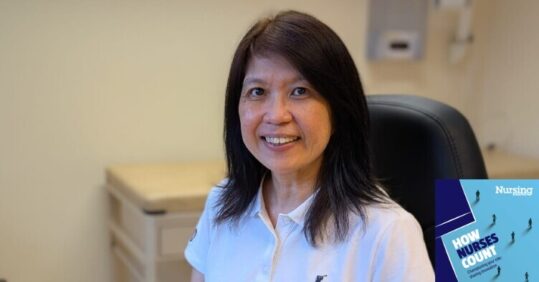
Winner of Nurse of the Year at last month’s General Practice Nursing Awards, Dr Jennifer Loke says her award win is about more than individual success.
Speaking with Dr Loke, Madeleine Anderson heard how the nurse consultant in Yorkshire is advocating for greater recognition of the expertise of practice nurses and the difference they make to the patients and communities they serve.
‘I see this award not only as personal recognition, but as a celebration of nursing and particularly primary care nursing,’ Dr Loke says.
‘Our work is often less visible, yet it is fundamental to patient outcomes and community health.’
Renewed respect for nursing
Dr Loke believes the award has helped change how nursing expertise is perceived, both by the public and within her practice.
‘Most importantly, it has brought renewed respect for nursing from the people who matter most, our patients.’
Since winning the award, she has noticed that patients who were previously less engaged are now booking appointments with her to discuss lifestyle change and long-term health management.
That renewed visibility mirrors the transformation Dr Loke has led at Park View Surgery in the East Riding of Yorkshire. Once a practice facing significant challenges, it is now thriving through innovative service delivery, strong clinical leadership and a firm commitment to health equity.
Improving access to primary care
Advanced nurse practitioners (ANPs), Dr Loke says, play a crucial role in improving access to primary care. With training that includes full physical examination skills and independent prescribing, including controlled drugs, ANPs can safely manage many conditions, she adds.
‘Advanced practice nurses provide autonomous assessment, diagnosis, treatment and prescribing without compromising clinical decision-making,’ she explains.
‘Patients requesting a GP appointment can often be seen promptly by an ANP, which increases capacity and reduces delays in care.’
In settings where GP shortages create bottlenecks, this expanded workforce helps shorten waiting times and ensures patients receive timely, evidence-based support. However, Dr Loke emphasises that clarity around the role is essential.
Related Article: ‘Nursing is not just a career, it has a world of possibilities’
‘Organisations must clearly define and communicate the scope of advanced practice. Only when patients and colleagues understand the depth of ANP expertise can the profession contribute fully to strengthening primary care systems.’
Prevention and long-term outcomes
For Dr Loke, advanced practice nursing extends well beyond treating acute illness. Preventive care and long-term health outcomes are central to the role.
‘Our assessments should focus on the root causes of illness, including lifestyle patterns, smoking, alcohol use, stress and the wider social determinants of health,’ she says.
‘Every patient encounter is an opportunity for education, early intervention and prevention of future complications.’
In managing long-term conditions, she encourages nurses to move beyond ‘tick-box’ approaches. By independently assessing patient risk factors, anticipating complications using validated screening tools and tailoring interventions, ANPs can support sustainable improvements in health, she adds.
‘By combining advanced clinical reasoning with a preventive, person-centred approach, advanced practice nurses play a vital role in improving outcomes and strengthening the quality of primary care,’ Dr Loke says.
Continuity of care in practice
Continuity of care, Dr Loke says, is one of the most powerful contributions of primary care nursing, particularly for patients with complex long-term conditions.
She describes her work with patients with poorly controlled type 2 diabetes and hypertension. Initial reviews involve comprehensive assessment and investigations, followed by medication optimisation and structured follow-up.
‘I often begin with weekly reviews to monitor blood pressure, side effects and self-management. As control improves, reviews move to three-monthly and then six-monthly intervals.’
Dr Loke remains the patient’s consistent point of contact throughout this journey. She coordinates care with GPs, pharmacists and specialist teams, interprets results and ensures information is shared across professionals.
‘Being present at every stage builds trust, improves adherence and supports early identification of deterioration. That continuity makes a real difference to patient outcomes and confidence.’
Autonomy and professional judgement
Advanced nurse practitioners in primary care often work with a high level of autonomy, particularly in urgent treatment centres and general practice. Dr Loke independently manages a wide range of acute presentations, including respiratory, urinary and skin infections, as well as minor injuries.
However, she notes that autonomy varies depending on experience, case complexity and organisational governance. While nurses are capable of managing long-term conditions and their complications, education and training pathways do not always prepare them for the full breadth of decision-making required, she suggests.
‘To maximise autonomy safely, advanced nurse practitioners need strong preparation, mentorship and ongoing education,’ she says.
‘With the right support, they can confidently diagnose, treat and prescribe across the majority of primary care presentations.’
Managing complex clinical decisions
Some of the most complex decisions Dr Loke faces are not purely clinical, but ethical and relational.
‘This often happens when evidence points clearly in one direction, but patient expectations conflict with it,’ she explains.
‘Examples include persistent requests for antibiotics for viral infections or pressure to prescribe sedatives for an older person living with dementia.’
Her approach is to explore beliefs, explain the evidence clearly and work collaboratively towards a safe and appropriate plan.
‘These situations require sensitive communication and professional accountability. Even when the final decision must prioritise safety, it is vital that patients or families feel genuinely heard.’
Related Article: More than half of GPNs report working while feeling mentally unwell, finds survey
Collaboration and patient advocacy
Collaboration is core to Dr Loke’s approach to care. She often takes responsibility for coordinating information, identifying gaps and facilitating conversations between professionals to prevent delays or fragmentation.
‘Patient advocacy is central to how I work,’ she says.
‘I ensure the patient’s voice is heard and that care plans reflect both clinical evidence and what matters most to them.’
She believes high-quality care depends on trust, psychological safety and mutual respect across disciplines.
‘My aim is to support continuity, reduce fragmentation and foster a collaborative culture where every professional’s expertise is valued and the patient remains at the centre of every decision.’
How Nurses Count
Dr Jennifer Loke’s award comes at a critical moment for the profession and sits firmly within the aims of our How Nurses Count Campaign.
‘There has never been a more important moment to launch the How Nurses Count campaign.
‘The NHS 10-year plan places enormous responsibility on community-based care, but that ambition can only be realised if nurses are equipped, empowered and trusted to lead it,’ Dr Loke says.
Launched last July, the plan is focused on the government’s three shifts from hospital to community, sickness to prevention and analogue to digital-first care. It includes a series of significant changes or nurses working across England, including more nursing apprenticeships and the expansion of advanced practice roles.
For decades, she believes, general practice nursing has been undervalued in comparison with secondary care.
‘Hospital interventions are dramatic and visible. What we do in primary care is often quieter with prevention, continuity, relationship-building, but its impact on population health is enormous.
‘A conversation that prevents a crisis or a review that identifies early deterioration can change someone’s life trajectory.’
Dr Loke also challenges the long-standing tendency to define general practice nursing by tasks rather than professional judgement.
Related Article: Practice nurses call for Agenda for Change terms and conditions to ‘feel safer’
‘When nursing is reduced to procedures or templates, it undermines the expertise we bring. What makes nurses count is not how well we replicate medical tasks, but how we apply nursing knowledge intelligently, holistically and proactively.’
For Dr Loke, the Nurse of the Year award has amplified a message she has championed throughout her career: primary care nursing is skilled, autonomous and essential to the future of accessible, equitable healthcare.
‘And that’s why the How Nurses Count campaign matters. It isn’t about seeking praise. It’s about reclaiming the professional identity of general practice nursing and ensuring that our contribution is understood, valued, and strengthened for the future of the NHS.’
Our How Nurses Count campaign aims not only to encourage nurses across primary and community care to share best practice and learn from one another, but also to ensure that their collective voice is recognised at the highest levels.
How Nurses Count seeks to amplify the experiences and insights of nurses so they are heard by employers, policymakers and government, making clear the essential role primary care and community nursing plays in shaping effective, equitable healthcare.
If you would like to get involved by sharing your story and the difference you make, please contact our editor Megan Ford on [email protected]

See how our symptom tool can help you make better sense of patient presentations
Click here to search a symptom