‘Nurses bring a breadth of knowledge to occupational health and it makes a big difference’
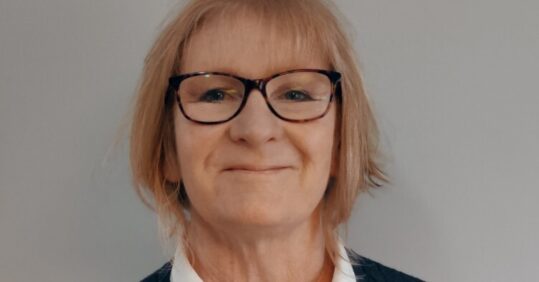


Occupational health nurse specialist Janet O’Neill hopes to see more education in occupational health for undergraduate nursing programmes. She highlights the importance of the role in easing the burden on the NHS by helping people be healthier at work and pinpoints nurses as bringing a ‘breadth of knowledge’ into the industry. This article comes as part of Nursing in Practice’s How Nurses Count campaign, which aims to champion nursing expertise and innovation.
‘A huge purpose of ours is to support organisations and to support the wider society as a whole, and that then has a knock-on effect of reducing the impact on the NHS,’ says Janet O’Neill, an occupational health nurse specialist with over 16 years of experience.
‘If people are in work, and they’re healthier in work, then actually they’re going to be less of a burden on the NHS.
‘But I absolutely think more needs to be more done [to raise awareness of occupational health].’
Ms O’Neill says she’s concerned that occupational health is ‘not even mentioned in undergraduate nursing’ programmes.
She says she is working on an initiative to encourage nursing placements within occupational health teams but that staffing issues mean there are barriers to this.
Ms O’Neill hopes to highlight the importance of the role of occupational health nurses and encourage more education for nurses into what she describes as the flexibility and enjoyment of the job.
The specialist nurse describes her journey into occupational health as a ‘happy accident’. After obtaining her qualifications in general nursing, psychiatric nursing and midwifery in South Africa, she moved to Swaziland.
‘I was working as a as a canteen manager in a factory as it was the only job I could get as an expat,’ she says. ‘And the manager of the factory found out that I was a nurse and asked me to open an occupational health clinic in the factory.
‘It was absolutely petrifying, because I had no idea what occupational health was.’
She then moved to the UK where she began running a nursing agency before finding an advert for an occupational health position.
Related Article: How a nurse-led community mental health hub is improving patient care and access
‘I had the interview and told them that this was the job for me and that I felt I would be the best person for the job.
‘So, for me personally, it was a happy accident, and I’d say that for over 50% of occupational health nurses, it’s a happy accident. They never planned to do it. It just happened some way.
‘I think that’s changing as a lot of nurses now become more aware of occupational health, they’re thinking about it more.’
Ms O’Neill now wears several hats day-to-day, including being the deputy head of the National School of Occupational Health in the East Midlands Deanery and working in training and development for a large occupational health provider.
She is also a trustee at the Association of Occupational Health and Wellbeing Professionals (IOH) where she is the vice president and director of professional development.
Explaining occupational health, she says there is a focus on preventative health and early intervention in an advisory capacity.
‘We sit between the employee and the employer,’ she says. ‘There’s significant number of illnesses that can occur due to work.
‘We’re heavily focused on supporting people… supporting people to remain in work and to get back into work.
‘And that’s where a big part of our advisory function comes in, that we are assessing people’s fitness for work, advising employers about what adjustments they can make to support that individual and advising that individual about what they can do to support their health to stay in work.
‘So that’s our biggest function – trying to keep workplaces and workers as healthy as possible, and support organisations with both their moral and legal responsibilities around health in the workplace.
‘Our whole remit is, how does work affect health? How does health affect work? We’re an ageing working population so it’s quite a wide remit and it’s exceptionally interesting.’
Continual learning is one of the aspects of the role Ms O’Neill enjoys the most, adding that she needs to constantly update her knowledge due to the variety of jobs and staff members she works with.
She says: ‘We as nurses, we have to be quite generalist, because we’re dealing with every condition under the sun and every workplace culture under the sun.
‘Universities are very different to corporate banking to manufacturing to rail. You’ve also got the workers themselves, the socioeconomic background that they come from, their health, beliefs… and that will change person to person.
‘And then, of course, you’ve got the job demand. It’s incredibly varied, and certainly we have to keep on our toes and keep ourselves updated continually.
‘It’s almost an ongoing process; there’s no way you can sort of sit rest on your laurels. It’s continual learning.’
Ms O’Neill highlights that a variety of skills are needed in an occupational health role such as flexibility, communication, critical thinking and autonomy.
She adds that nurses can thrive in the position as they are readily equipped from their qualifications.
‘Nurses bring that breadth of knowledge around physiology, anatomy, the biological impact,’ she says. ‘But they also bring that mental health knowledge and that understanding of health conditions generally, and that really makes a big difference.
Related Article: ‘Nursing is not just a career, it has a world of possibilities’
‘A lot of nurses are now coming in with leadership skills because a lot of the universities are actually incorporating leadership skills in there, which I think is absolutely key.’
‘The really important things are flexibility, communication, being able to think critically, and autonomy – and this is a clear nurse skill – it is that ability to reflect and learn which is so important in occupational health because we’re dealing with so much and you’re having to learn all the time.
‘Also, I think you have to have a little bit of nosiness, a little bit of curiosity is important.’
However, Ms O’Neill fears there is not enough awareness of roles within occupational health and states that without the positions, it would be ‘an absolute disaster’.
She says that due to the number of people currently not working, they will need support when they get back into employment.
She says: ‘We believe that the need for occupational health is going to grow exponentially because of this worklessness in the working age population.
‘Also, as the government puts in the WorkWell programme to help support people into work, they’re going to need people’s health assessed against particular jobs.’
Ms O’Neill adds that, while you do not need to be a nurse to work in occupational health, the biggest population of regulated professionals are nurses.
‘We are a multidisciplinary workforce. The bulk of occupational health is delivered by nurses,’ she says.
‘For an employer, if they’re looking to employ somebody that’s going to cover the most ground, then it would be nurses. That’s why nurses are the bulk of the occupational health population.’
Despite this, Ms O’Neill fears there is not enough education for trainee nurses about occupational health, including a lack of work placements.
She says: ‘We’ve tried with the Nursing and Midwifery Council [to get occupational health into undergraduate nursing programmes], we’ve tried every which way to try and get some sort of awareness within an undergraduate programme, even if it’s an hour module.
Related Article: More than half of GPNs report working while feeling mentally unwell, finds survey
‘I think even if we could get an hour or two in and have a consistent programme then we may raise that awareness.’
As part of her efforts to educate people about the industry, Ms O’Neill – as part of her role at the East Midlands Deanery – runs a free mentoring scheme for those interested in occupational health.
She says: ‘If people feel unsure, they don’t understand, or they want to help in upskilling themselves ready an interview, or maybe they want to understand their transferable skills or they want to do some pre upskilling… then that mentoring scheme is there to support with that.’
–
Nursing in Practice’s How Nurses Count campaign aims not only to encourage nurses across primary and community care to share best practice and learn from one another, but also to ensure that their collective voice is recognised at the highest levels.
Please get in touch with editor Megan Ford ([email protected]) or senior reporter Gee Harland ([email protected]), to be involved in our campaign and share how you count.

See how our symptom tool can help you make better sense of patient presentations
Click here to search a symptom