‘Providing the care that isn’t there’: Redefining community menopause support
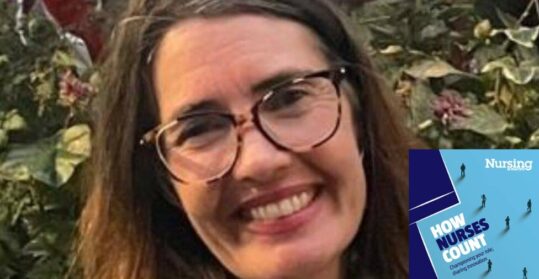


Advanced nurse practitioner Rebecca Hall shares the successes of a pilot programme is been leading to provide inclusive menopause support for local populations and explains why she believes nurses in general practice are ideally placed to lead care in this area. This article comes as part of Nursing in Practice’s How Nurses Count campaign, which aims to champion nursing expertise and innovation.
After identifying a gap in menopause care provision, Ms Hall set out to launch a nurse-led pilot that would go on to improve access to support and address inequalities.
Unlike traditional women’s health services, the initiative is designed for all people experiencing the menopause and aims to reduce disparities in care access.
The pilot – which offers free monthly group support sessions and is based in Havering – is open to anyone from Barking, Dagenham, Redbridge and wider communities and is provided as part of the Live Well Havering Programme.
Sessions cover topics including diet and lifestyle changes, sleep support, symptom management and discussions on hormone replacement therapy (HRT).
Ms Hall, who as well as being an ANP is also a non-medical prescriber based in general practice, said that while this work doesn’t replace but supports appointments in GP practices, she hoped it saved busy primary care teams some time.
‘I can’t imagine I’m taking work away from nurses or other clinicians [but] it’s going to save them time during consultations, as patients will come prepared or have tried dietary, lifestyle changes and other strategies already,’ she said.
‘I can see what patients need’
The idea for the group emerged when Ms Hall was working in a women’s health hub last year. She approached a local social prescriber to ask if a ‘menopause café’ existed.
Related Article: How a nurse-led community mental health hub is improving patient care and access
When told no, she was asked if she would like to start one. At the time her clinical commitments made this impossible, but she returned to the idea this year once her role changed.
The resulting group sessions aim to strike a balance between the seriousness of menopause and the warmth of community connection, said Ms Hall.
‘It’s lovely and it’s very light-hearted – even though menopause involves many symptoms and long-term complications,’ she explained.
She added: ‘There are many inequalities in menopause care and this group has given us a way of providing information for patients who may not have had access to evidence-based, nurse-led information.’
Ms Hall credits her determination to the voices of patients who repeatedly told her what they needed and could not find elsewhere.
‘I understand what information and advice should be offered to participants, according to guidelines, to provide holistic support during menopause,’ she explained. ‘But they are also very comfortable telling me what they need from me.’
‘Collaboration is essential’
When asked what the process of creating and running the pilot had taught her, Ms Hall highlighted the importance of working with colleagues to make best use of different professionals’ clinical skills to provide the right care for patients.
‘Collaboration is essential. I couldn’t have set this up without our social prescriber, whose skills and community connections were vital. Nurses running similar projects should link in with others for support,’ she said.
‘It’s also helpful to understand your local population. Looking at menopause-related prescribing patterns, including HRT rates, can highlight unmet needs.’
Longer-term hopes for the project
Ms Hall stressed that she wanted to expand the project further and that nurses must be at the centre of whatever she does next.
She added: ‘I’m keen for more nurses to take on this work. They already have the skills, the local knowledge and the relationships that make this kind of support so effective. Patients feel comfortable telling nurses what they need from us, and that’s why we’re so well placed to lead.’
‘I have many ideas, but it’s vital that nurses doing this work have the right structures around them like policies, protocols, education, mandatory training and clarity on scope of practice.
‘I’ll continue developing the project and hope it inspires others. No two versions of this service will look the same, because each community has different inequalities, priorities and voices. That’s what makes it so rewarding.’
Related Article: ‘Nursing is not just a career, it has a world of possibilities’
Why general practice nurses are ideally placed to lead
The role of general practice nurses in menopause care and support is vital, Ms Hall noted.
These nurses, she says, hold the essential skills required for high-quality menopause support: strong communication, holistic assessment and, crucially, established trust with patients.
Most importantly, the continuity that primary care nurses build over years of contact places them in a unique position.
‘We are the ones in that privileged position to amplify the care and that’s what people want,’ she noted.
She believes nurses should be central to the future of menopause care as national policy increasingly points towards care in the community.
‘If you look at the 10-year plan, or at women not seeking menopause care through traditional services, they want support in their community,’ she said.
Launched in July and centred around the government’s shifts from hospital to community, sickness to prevention and analogue to digital, the plan includes many aspirations for nurses, including having nurses lead neighbourhood health services, expanding nursing apprenticeships and expanded advanced practice roles.
And yet, Ms Hall worries about the fragility of the workforce: ‘If we were to lose nurses like me, we would lose a whole army of people providing menopause care.’
Three top tips from the pilot:
- Design services around inclusion and local need
Make menopause support accessible to all people experiencing menopause and tailor it to local populations. Understanding community inequalities and reviewing local prescribing patterns (such as HRT use) can help identify unmet needs and improve access to care. - Use nurse-led group support to empower patients and ease pressure on GP services
Nurse-led group sessions can prepare patients with evidence-based information on lifestyle, symptom management and treatment options, helping them feel informed and confident while also saving time in GP consultations. - Collaborate and build strong support structures
Successful pilots rely on collaboration with colleagues such as social prescribers and community partners, including in the voluntary sector. Nurses looking to lead similar initiatives should ensure clear policies, protocols, training and scope of practice guidance are in place to support safe, sustainable care.
Why do I count?
Reflecting on her contribution to the How Nurses Count campaign, Ms Hall said: ‘I’m providing a service, but I’m more than that, because all nurses adapt what we provide according to what our patients need. We can adapt. So I’m providing a service that isn’t there.’
Related Article: More than half of GPNs report working while feeling mentally unwell, finds survey
Through her work, Ms Hall is showing exactly how nurses count by stepping into gaps to provide high quality information, listening deeply, and providing that wasn’t there before.
Our campaign aims not only to encourage nurses across primary and community care to share best practice and learn from one another, but also to ensure that their collective voice is recognised at the highest levels.
How Nurses Count seeks to amplify the experiences and insights of nurses so they are heard by employers, policymakers and government, making clear the essential role primary care nursing plays in shaping effective, equitable healthcare.
Please get in touch with news and features writer Madeleine Anderson ([email protected]) or acting editor Megan Ford ([email protected]), to be involved in our campaign and share how you count.

See how our symptom tool can help you make better sense of patient presentations
Click here to search a symptom