Why we need a strong nursing voice in primary care


NURSE LEADERS IN GENERAL PRACTICE
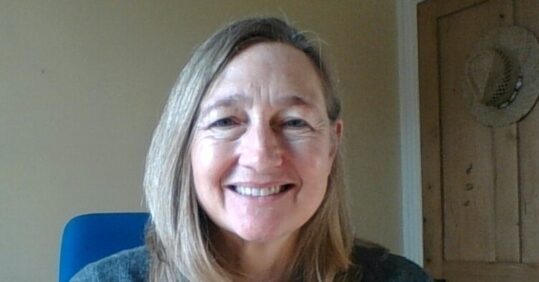
 Changes happening in Integrated Care Boards (ICBs) risk reversing some of the gains made in local nurse leadership, nurse leader Sarah Hall tells Nursing in Practice’s editor Carolyn Scott. She is vice chair of the RCN General Practice Nurse Forum, Queen’s Nurse, and a clinical standards manager in Devon ICB, where she supports the work of nurses working in general practice. This article is part of the How Nurses Count series.
ICBs in Devon and Cornwall have formed a cluster, with a formal merger expected in the future. What might this all mean for nursing in general practice and the work you’ve been doing?
Well, we’re in a process of reorganisation, and we’re also one of the ICBs that hasn’t got a chief nursing officer in their new structure. So, nurse leadership is a big talking point at the moment. The target for the merger is now May 2026.
Devon ICB is clustered with Cornwall and the Isles of Scilly. We have 117 practices in Devon and there’s around 55 in Cornwall, so together we have a lot of practice nurses.
To be clear that I’m commenting solely from a personal perspective, but to me there’s a lack of value for nursing in that we will have a chief medical officer, but not a chief nursing officer.
There’s the risk of going back to being in silos again. Where will the nurse voice come in, and where will nurses go for governance and guidance?
It’s quite a concerning time really, from a leadership perspective. It’s likely that we’re going to lose a lot of knowledge and a lot of our experienced people within the organisation.
Why is it so important that the voice of nursing in general practice is heard as the changes happen across the NHS?
I was a practice nurse for over 20 years and have been in this role for eight years, and yet we’re still talking about the same things, aren’t we – how do we demonstrate our value?
The general practice nurse looks after people through all stages of life, from birth to end of life. We see them throughout their lifespan, and their families as well, for multiple appointments, for different areas of their health.
General practice as a whole is very flexible and adaptive, and able to react quickly to change and to try new things. I think to look at your population health and then have the flexibility to action something new to meet a need – that is the real strength of being a nurse working in general practice.
Related Article: How a nurse-led community mental health hub is improving patient care and access
It also makes it so interesting as a job role, doesn’t it – the variety, autonomy and the ability to make changes that have a positive outcome for your patients.
If we’re not there, we are going to be stepping back in time 50 years, probably back to the beginning of the NHS. It could be a very medically led model, and I think we all realise that would not be good for our patients.
Prevention underpins everything we do; we’re giving guidance and supporting patients to keep themselves healthy. That’s why we are key players in the new NHS 10 Year Health Plan and the movement from ill health to prevention and from secondary to care in the community.
We are already there doing it – and doing it really well!
What opportunities do you see for nursing in primary care moving forward, both clinically and in terms of leadership?
My thoughts on the 10 Year Health Plan are that there is a lot of opportunity there for nursing in the community – and that’s not just for practice nurses, but for nursing across the community.
I hope that nurses will put themselves forward for leadership roles, and that they don’t get overlooked.
In the past, nurses have not been considered for leadership posts, and sometimes we don’t consider ourselves for them either.
I think this is our time. There will be opportunities; we just need to take them – to step up and step forward.
But this period of change is going to be very challenging. There’s so much that needs to be in place for it to work, and we’ve got massive steps to take to get there.
I can visualise how a neighbourhood hub could work and can see that it would really benefit if we had the patient at the centre and everybody else comes to them. For me, the funding needs to move with the patient.
But we haven’t got enough detail on this yet, and I think we’ve got a long way to go to get to this.
Potentially, there could be a lot of opportunities for nurses within it, and because we are the generalists, there’s a great opportunity for practice nurses working alongside our colleagues in other areas of nursing.
Of course, we used to work more closely. Historically, we had community nurses working in the surgeries alongside practice nurses and although we were employed by different employers, we still felt we were part of the same team and worked together and shared patients.
That relationship can be lost by dividing up into specialist areas, and we lose expertise and knowledge. I am against siphoning off areas of our work to specialist areas. For example, we have specialist leg ulcer clinics, but we then can lose the knowledge and expertise within general practice, and we have nurses who have never looked after people with leg ulcers.
It’s the same for respiratory disease. If we hive off all the spirometry and the specialist care, you lose that knowledge and skill as generalist nurses, and I think that then isn’t good for the patient. You haven’t got that holistic view of your patient – and our super strength is that we are holistic practitioners.
How is the ICB review likely to impact on your role and the support that nurses in general practice receive?
My role is in supporting the workforce: with guidance, best practice, and raising standards of quality and safety. We’ve had very successful programmes running in Devon to support general practice nursing in particular, though that funding has now recently dried up.
Again, from my personal perspective, I think that if we lose the role that I have been undertaking, that would be a huge backward step for general practice nursing here.
Related Article: ‘Nursing is not just a career, it has a world of possibilities’
We’ve come so far in Devon, and made such great progress since the ten point plan. I’ve developed an extensive distribution network across all the practice nurses in Devon and send out a weekly email, where I gather together all the information that’s come along.
Then we have a lead nurse network that meets every fortnight. The ICB has supported this with funding to encourage PCNs to appoint a named nurse lead across the PCN whose role is to attend these meetings and feedback information – up and down – as well as CPD.
We also have an excellent legacy mentor programme here that we started around the time of the pandemic, and which now sits with our new to practice programme as support for nurses new into general practice.
That has been very successful in supporting new nurses into general practice, but actually in the last year – and I think we’re not alone in this – we are seeing new nurses leaving general practice within the first year.
Most of them are citing a combination of pay, terms and conditions, plus workload and lack of support in practice.
I’m really frustrated at that lack of support in practice in particular.
What does the future look like for nursing representation, your role, and for colleagues working across the South West?
From my perspective as a leader, I’ve absolutely loved this role. I first came into practice nursing not really knowing what to expect and it was a fantastic career for me, and then I felt I was in just the right place when I became the general practice nurse lead.
At the moment though, I’m feeling really sad because of the changes – and I don’t want us to lose the great work that we’ve done to improve things for general practice nursing.
There is an equivalent of me working in Cornwall, and I’m hopeful that we might get to work together after the ICB merger.
Certainly, as a group of leads across ICBs and LMCs in the South West, we are trying our hardest to put forward the perspective and the view of general practice nursing. For example, we’re having meetings now to feedback on the CNOs new strategy.
So, we are not giving up. We’re going to give it our best shot to make sure that we are not overlooked.
Related Article: More than half of GPNs report working while feeling mentally unwell, finds survey
How Nurses Count!
This article is part of the How Nurses Count campaign, showcasing the impact of nurses in general practice.
Sarah Hall, vice chair of the RCN General Practice Nurse Forum and Queen’s Nurse, working in Devon, says:
‘Prevention is our prime role within all the areas of care that we give, from the immunisations through to long term conditions management.
When our patients come to see us, they’re usually relatively well. They just happen to have diabetes, COPD, or a wound that won’t heal. We see patients who are well, and we want them to keep well.’

See how our symptom tool can help you make better sense of patient presentations
Click here to search a symptom