‘I wouldn’t be in any other profession’: Health visitors championed in awareness week
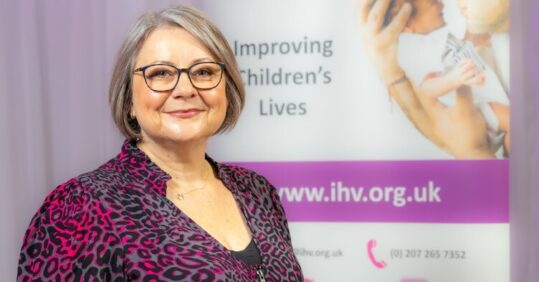


Health visitors should be championed more as an essential role that makes a difference and must not be forgotten within the wider nursing agenda, says registered nurse Dr Michelle Moseley ahead of Wales Health Visiting Week 2026.
The Institute of Health Visiting (iHV) will be celebrating health visitors from Monday 2 March to Friday 6 March in a week which aims to raise awareness of the role and the highlight its importance across Wales.
Events will be taking place to commemorate the week including a webinar, videos sharing family stories, highlight reels and more.
Speaking to Nursing in Practice, the iHV’s director of programmes (learning and development), Dr Moseley said it is ‘really important’ that health visitors are recognised and ‘not diminished at all’ due to how essential the role is.
Health visitors are registered nurses or midwives who have an additional qualification as specialist community public health nurses. They work in partnership with communities, other professionals and families during the antenatal period, and until the child reaches the age of 5 years old.
Dr Moseley said: ‘I think the Wales health visiting services has really embraced this week as a way to raise the profile of health visitors and advocate for the profession.
Related Article: How a nurse-led community mental health hub is improving patient care and access
‘They see this week as really bringing health visitors together to celebrate what they do, but also to align it to policy – the Healthy Child Wales Programme, the Children’s Commissioner work, and more.
‘I still think that some professionals and members of the public, unless you’ve had a child and have come across a health visitor, don’t really know what a health visitor is and what they do.
‘So, I think it’s a way of raising that profile nationally, but also raising morale, bringing health visiting and health visiting professionals together, to join forces and to say, “We are here, we are important, and we can, if given the chance, give children the best start in life”.
Dr Moseley, who is a health visitor and a nurse educator, explained that the role is more important now than ever as ‘parenting has evolved’.
She said this week is an opportunity to reach more families in the antenatal period by raising awareness.
‘Parents are struggling,’ she said. ‘There is increased perinatal infant mental health issues that parents are presenting with, including in fathers.
‘There are financial issues, mental health issues, safeguarding issues, family issues – parenting is tough.
‘Health visitors have the opportunity to reach families in the antenatal period but sometimes that visit doesn’t happen. If we could truly deliver our Healthy Child Programmes across the UK in the fullest form, we would have a better reach and a better opportunity to prevent longer term issues with children, babies and families.’
As well as highlighting the importance of the role, Dr Moseley hopes this week is an opportunity to showcase health visitors as part of the ‘bigger nursing agenda’.
The PhD‑qualified researcher said: ‘Health visitors are a very small part of the wider nursing agenda. We’re nurses and midwives. Sometimes we get a little bit lost in that bigger nursing agenda.
Related Article: ‘Nursing is not just a career, it has a world of possibilities’
‘I think by raising the voice of health visiting by standing up and saying, “We are here. We make a difference” it can help us work in partnership throughout the nursing profession.
‘We take handovers from the midwife, and we hand over to the school nurses. We are all in it together.
‘So nursing needs to be appreciated, as does health visiting within that wider nursing profession.’
She added that it would be good to see health visiting embedded into undergraduate curricula.
‘Health visiting gets lost and sometimes that isn’t a forefront of placement experience,’ she said. ‘I think it needs to be featured a little bit more in undergraduate curricula.’
Digital content will be shared across Welsh Government, health boards and local authorities throughout the week.
Dr Moseley concluded: ‘The role has been in place for over 100 years. It’s really important that the role is recognised and not diminished at all, so that they can do the job properly, so that they are strong in numbers, that they are able to delegate appropriate work, but also that they are recognised for the specialist practitioners that they are.
Related Article: More than half of GPNs report working while feeling mentally unwell, finds survey
‘I wouldn’t be in any other profession. I’ve been a children’s nurse, health visitor, safeguarding lead, an educator, and now working for a wonderful charity that promotes this role.
‘I wouldn’t be in any other profession because it is such a rewarding role.’

See how our symptom tool can help you make better sense of patient presentations
Click here to search a symptom