Patients issued fresh warning over non-sterile wipes
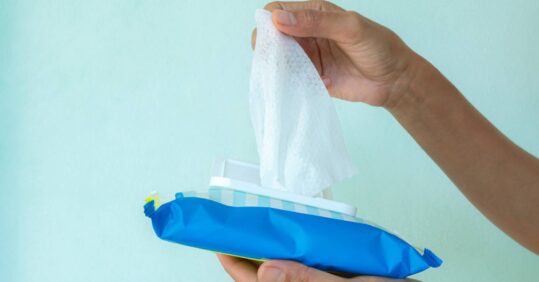


Patients have been warned against using non-sterile wipes on broken skin and to always follow the advice of community nurses and clinical teams when it comes to the care of intravenous lines.
The reminder comes amid renewed concerns around four specific non-sterile wipe products that have been linked to a recent outbreak of Burkholderia stabilis.
The public has once again been warned by the UK Health Security Agency (UKHSA) and Medicines and Healthcare products Regulatory Agency (MHRA) to not use four specific products (see box) ‘under any circumstances’.
Burkholderia stabilis is a type of bacteria, usually found in natural environments such as soil and water, and can cause serious infections.
Related Article: How a nurse-led community mental health hub is improving patient care and access
There have been 59 confirmed cases in the UK between January 2018 and February 2026 associated with these specific non-sterile alcohol-free wipes. Some of the cases have required hospital treatment and one death has been attributed to the Burkholderia stabilis, according to the agencies.
A warning was first issued to health professionals and the public about the products last summer.
Dr James Elston, consultant in epidemiology and public health at UKHSA, said overall risk to the public remained ‘very low’ and that affected products had been withdrawn from sale.
‘However, we are continuing to see a small number of cases in vulnerable patients, and we are now aware of one associated death,’ he added.
The agencies said it was concerned that some of the products could remain in some first aid kits and in people’s homes.
As part of its latest warning, the bodies also reiterated that people must not use non-sterile alcohol-free wipes, of any type or brand, for first aid, on broken or damaged skin and should never be used for cleaning intravenous lines.
Dr Alison Cave, MHRA’s chief safety officer, added: ‘Patient safety is the MHRA’s top priority. The MHRA issued notices to sellers of specific products in July, resulting in their withdrawal from sale.
Related Article: Heavy caring responsibilities could accelerate cognitive decline, suggests study
‘If you have any wipes at home or work, double check they are labelled “sterile” before using on broken skin. Follow the advice of your clinical team, GP or community nurse in the care of your intravenous line.’
Burkholderia stabilis rarely causes infection in healthy individuals and the risk to the general population is very low. However immunocompromised individuals, those with other risk factors such as cystic fibrosis and patients at home with intravenous lines, are at higher risk of developing infection.
There has been no person-to-person transmission that has been identified.
During outbreak investigations in 2025, the following products were found to be contaminated with Burkholderia.
These four products should not be used under any circumstances:
Related Article: Nurses support action to protect children from social media harms but urge caution
- ValueAid Alcohol Free Cleansing Wipes
- Microsafe Moist Wipe Alcohol Free
- Steroplast Sterowipe Alcohol Free Cleansing Wipes
- Reliwipe Alcohol Free Cleansing Wipes (testing revealed contamination with a Burkholderia strain not related to the outbreak cases)
Source: MHRA/UKHSA

See how our symptom tool can help you make better sense of patient presentations
Click here to search a symptom