Nurses support action to protect children from social media harms but urge caution
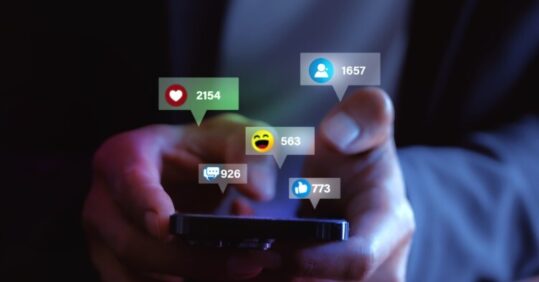


Nursing organisations have signalled support for the government’s plans to ban social media for young teenagers but have urged the need for caution and greater clarity on how it will be implemented.
The Department of Science, Innovation and Technology (DSIT) announced this week that social media platforms, including Snapchat, TikTok and Instagram, will be banned for teenagers under the age of 16.
Nursing organisations including the School and Public Health Nurses Association (SAPHNA) and the Queen’s Institute of Community Nursing (QICN) have shown support for clamping down on social media use for young people.
They say that school and community nurses witness the ‘devastating impact’ of social media everyday through bullying and safeguarding issues and hope the ban will ‘give children their childhood back’.
However, concerns have been expressed over teenagers being able to find a way around verification processes to stay online and calls have been made for better digital education.
Some within the nursing community have also highlighted the benefits of social media, when used appropriately with the right safeguards, for young people and stressed that any restrictions should be balanced against rights.
In a bid to protect children online, the DSIT plan to introduce the ban by Spring 2027. It plans to echo the same model for a social media ban as seen recently in Australia which deactivated existing profiles for teens.
It then introduced ‘highly effective age assurance (HEAA) measures’ to prevent teens making new accounts such as using government IDs, face or voice recognition, or ‘age inference’ which analyses online behaviour and interactions.
The UK’s regulator for the communications services Ofcom will conduct a study on what is effective age assurance for verifying whether someone is over 16.
Related Article: UK deploys public health team to support Ebola outbreak response
In Australia, social media companies are individually responsible for enforcing the ban and face fines of up to A$49.5m (£25m) for serious or repeated breaches.
‘It will keep young people safe online and give children their childhood back’
A spokesperson for SAPHNA welcomed the move, stating it will ‘keep young people safe online and give children their childhood back’, but they suggested they were unsure if a blanket ban was ‘the right step’.
A spokesperson said: ‘Everyday school nurses see the devastating impact that unregulated social media access has on children and young people’s health and wellbeing.
‘Whether a total ban is the right step is unclear. We recognise that the ban might be the first steps in public health education and behavioural change, shifting the culture of social media use.
‘However, we are concerned that the evidence of effectiveness for bans and other restrictions is reported to be limited.
‘Data from Australia suggests that most children and young people continue to access to social media.
‘SAPHNA will be keen to understand what steps the government will take to hold platforms to account ensuring that they take steps to ensure online safety for children and young people.’
It added: ‘In addition, there needs to be a wider public health response to keeping children and young people safe online.
‘Many will find a way around verification processes to stay connected and remain exposed to the online risks and those who do cease to have access will then suddenly be exposed to social media once they reach the age of 16 and be unequipped to navigate the risks of the digital world.
‘More needs to be done to improve digital literacy skills to mitigate these risks. Through effective legislation, public health intervention and improved awareness we will see healthier, happier children getting online with safety and confidence.’
‘We support action to protect children from online harms’
Chief executive of the QICN Steph Lawrence said she also supports the action but stresses there must be ‘a balance’ between protection and rights.
‘We support action to protect children from online harms,’ she said.
‘School nurses, children’s community nurses and mental health nurses see every day the impact social media can have on children’s sleep, anxiety, self-esteem, bullying and safeguarding.
‘A ban on social media for under-16s could be an important public health measure, but implementation will be critical.
‘There must be clarity on age assurance, protections against children being pushed into less regulated online spaces, and support for schools, families and health services.
Related Article: Nursing staff ‘at risk’ amid Ebola outbreak, warns RCN
‘Any restrictions must also uphold children’s rights to participation, connection, information and access to support.
‘For some vulnerable children and young people, online spaces can be a lifeline, so this policy must balance protection with rights.’
She added: ‘As care moves closer to home through neighbourhood health services, community nurses have a vital role in helping children, young people and families navigate digital risks, emotional wellbeing and access to safe, inclusive support.
‘For us, this is not only about restriction; it is about ensuring digital change protects children from harm, reduces inequalities and upholds their rights.’
‘Social media used in the right way can be a really positive experience’
Nicola Blunt, a lead school nurse for an independent boarding school in South Derbyshire, said she ‘is torn’ over the ban, stating social media can be a ‘powerful tool’.
‘[If social media is] used in the right way with safeguards in place it can be a really positive experience,’ she said.
‘We often share helpful social media posts with our pupils to signpost to resources, reels and other content and this can really help when we’re delivering relevant health promotion and education.
‘It seems a shame that those under 16 may now no longer be able to engage with this as there is some amazing work being done by organisations using social media.’
As well as a social media ban, the government plans to look at overnight curfews and breaks in infinite scrolling for under-18-year-olds and will set out more detail in July.
Announcing the ban, Prime Minister Sir Keir Starmer said: ‘Parents want to keep their kids safe and happy, but the online world has made that harder than ever.
Related Article: Pollen 101: how nurses can help patients manage hay fever symptoms
‘I’ve heard first hand from families crying out for change and we will do right by them.
‘That’s why we’re going further than any country in the world by banning social media for under-16s and putting wider protections in place to give kids their childhood back.
‘This is a line in the sand. Tech giants had their chance and failed, but we’re stepping in to protect children, back parents and set a new normal for future generations.’
Messaging services like WhatsApp and Signal will not be included in the social media ban.

See how our symptom tool can help you make better sense of patient presentations
Click here to search a symptom