‘Every GP practice should have a mental health nurse – people don’t know where to turn’
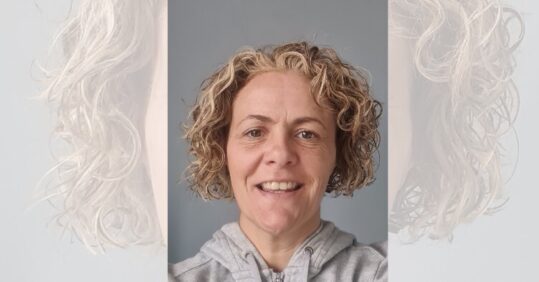


Mental health practitioner Marie Barker is working to raise awareness of her role within general practice, advocating for its importance in ‘bridging the gap’ between GPs and mental health services. She warns that mental health is ‘underfunded’ with teams ‘bursting at the seams’ and the existence of designated nurses and practitioners in primary care should be spotlighted. This article comes as part of Nursing in Practice’s How Nurses Count campaign, which aims to champion nursing expertise and innovation.
‘I do think, if it was possible, every GP surgery should have a mental health nurse attached, because mental health is huge and people don’t know where to turn,’ says Ms Barker, who registered as a nurse in 1999.
‘People are suffering and not being listened to. Also, there is still a stigma around mental health so having it in the GP practice is a little bit nicer.
‘There’s no bold sign nailed outside saying “mental health” which is good as people still have got that fear of mental health.’
Ms Barker, who works as a mental health practitioner within the Havering Crest PCN covering seven surgeries, says every day is ‘very, very different’.
‘But I do think with the feedback I’ve got from patients I’ve seen is that it is a very needed service,’ she adds.
Under her service, she gets more time with the patient.
‘A GP has 10 minutes to see someone, and for a first-time mental health assessment you need at least an hour to do that assessment, to document everything, and to refer,’ says Ms Barker.
‘So, we do a take a lot of the load off GPs and, for the patient, they’re comfortable as they’ve always been going to their GP surgery so it’s nice that there’s mental health practitioners within there.
‘Now, when they do feel low or anxious, they can see a practitioner in their GP surgery and I think really helps them rather than thinking, “I’ve got to go to a mental health team and be seen”.’
Ms Barker, who has been working in mental health nursing for 26 years, wants to raise awareness of her role, highlighting the need for more dedicated roles such as hers in GP practices.
Related Article: How a nurse-led community mental health hub is improving patient care and access
‘I think it’s great having mental health nurses in there,’ she says. ‘I just think the whole care in a GP surgery is so much better, the practice can see the whole person. It’s all holistic.’
When training to be a nurse, Ms Barker had intended to become a general nurse in A&E before completing some training in mental health.
‘I just absolutely loved working on the mental health wards,’ she says. ‘I was always questioning. I was always thinking, “Why? Why has this happened? Why is this person acting this way?”
‘With mental health, there’s so much more to it, and I just found it fascinating. It grabbed my attention and I just find it brilliant and very challenging as well – and I love being challenged.’
Ms Barker then spent 12 to 13 years working in forensic mental health, helping patients within the criminal justice system, before spending two to three years in community mental health nursing, helping patients when they were released back into communal care, hostels, or their own homes.
She then piloted a new initiative from NHS England for mental health nurses to be embedded within police custody.
After eight years, Ms Barker moved into working with adult mental health in patients over the age of 65.
Now, she works as a mental health practitioner within the Havering Crest PCN, after another new initiative was launched by NHS England to have a mental health nurse attached to a GP service.
‘I think it was because it was something new, a new initiative, and I just thought, “Excellent. Let me try that, this could be a really good role”.
‘I hoped it would be able to stop the backlog of waiting times for assessments with mental health because GPs – they have the knowledge of mental health, but they haven’t got time to do full mental health assessment and will just refer to the mental health teams.
‘And actually, patients often don’t need to be referred there, so I hoped to reduce those referrals too.
‘It was another challenge, having a go at bridging the gap and working with GPs.’
Ms Barker deals with many mental health conditions from low-level anxiety to bereavement and those experiencing domestic violence.
Her daily routine can consist of first-time mental health assessments, referrals to other teams, recommendations of medications, or simply just being a listening ear.
The role requires a variety of skills including clear communication, confidence, documentation, assertion, prioritisation and more. But Ms Barker spotlights one skill above all others.
She says: ‘I do think just being real, just being you, is important. A lot of people say, “I feel really listened to, I find it really easy to talk to you” and comments like that are through me just being me.
‘And I think that’s what you need. You need that. And you need to genuinely care as well.’
Related Article: ‘Nursing is not just a career, it has a world of possibilities’
She adds that patients also respond well to the location of her role, saying they often feel ‘more comfortable’ seeking mental health help within their own general practice.
The practitioner adds that, if possible, the role should exist in all practices.
But despite the positive reception from her patients, Ms Barker believes not enough is being done to advocate for the roles within GP surgeries, explaining that she is often faced with confusion about what her job entails.
She says: ‘A lot of people know about general practice nurses being in GP surgeries, but I don’t think it’s really highlighted that mental health practitioners are there too and the work that they do.
‘I’ve heard comments of, “oh, it must be a nice little number that just sitting in a GP surgery, seeing people”.
‘There’s no awareness of how difficult and pressured this role can be, as well draining and very responsible.
‘You’re taking responsibility of someone’s life there in front of you and you’re on your own, mainly, so I do think there should be a lot more around what we do and people knowing that we’re actually in the GP surgeries.’
She adds that this is particularly poignant now as mental health treatment is in a precarious position, with ‘not enough support’ available for people.
‘I think mental health care has gotten worse,’ she explains. ‘I think it’s underfunded. There’s not enough support out there for people, the teams are bursting at the seams with referrals and caseloads.
‘It’s not nurses’ faults because it’s all about figures and tick boxes and how many people have been seen.’
However, Ms Barker continues to enjoy her work in mental health, adding she is ‘forever thinking’.
Related Article: More than half of GPNs report working while feeling mentally unwell, finds survey
She concludes: ‘I always think, no matter how long you’ve been in this role, there’s always something different thrown at you, and you’re always thinking one step ahead.
‘I do believe, after so long in mental health, you almost get that sixth sense. Someone might be telling you, “I’m alright, I’m fine”, but there’s something else there and you need to change your plan.
‘So, you’re forever thinking.’
Nursing in Practice’s How Nurses Count campaign aims not only to encourage nurses across primary and community care to share best practice and learn from one another, but also to ensure that their collective voice is recognised at the highest levels.
Please get in touch with editor Megan Ford ([email protected]) or senior reporter Gee Harland ([email protected]), to be involved in our campaign and share how you count.

See how our symptom tool can help you make better sense of patient presentations
Click here to search a symptom