CPD: Recognising and managing rashes in sexually transmitted infections


 In this case-based CPD eLearning module, nurse specialist in sexual health Jodie Crossman discusses three cases involving presentations with rashes associated with sexually transmitted infections.
Complete the full module on Nursing in Practice 365 today
Rashes are a common presentation in general practice and community settings, but those associated with sexually transmitted infections (STIs) can be easily missed if not seen within a sexual health context.
Patients may be reluctant to disclose their sexual history within a primary care setting, so it is important for clinicians to be proactive with their questioning, and create an environment where patients feel safe and supported to discuss their sexual health.
Understanding the characteristics and systemic clues of STI-related rashes is crucial for early detection, patient safety, and public health. Late diagnosis of STIs can have long term consequences for a patient’s health, so maintaining an awareness of potential symptoms is vital.
Related Article: Pollen 101: how nurses can help patients manage hay fever symptoms
This case-based module explores three varied case studies to highlight different presentations of STI-related rashes in real-world nursing practice.
Learning objectives
- Identify common sexually transmitted infections (STIs) that may present with a rash.
- Distinguish between different types of STI-associated rashes.
- Understand the diagnostic and treatment pathways for STI-related dermatological presentations.
- Improve communication with patients around sensitive symptoms and partner notification.
All cases in this module are hypothetical and developed for educational purposes
Case study 1: Mpox infection in a 27-year-old male
Presentation:
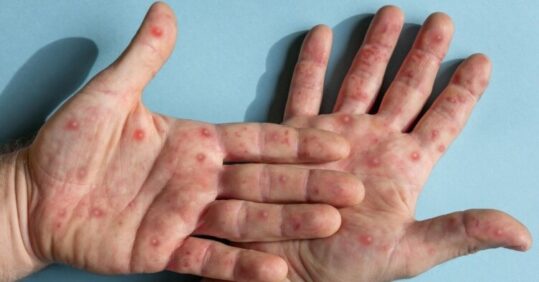
Eli, a 27-year-old man, presents to the GP practice with a rash which is itchy and painful. He reports fever, sore throat, fatigue and painful inguinal lymph nodes over the past 5 days. The rash began as small red bumps, which became pustular and now have central umbilication.
Eli is sexually active with multiple male partners and reports attending a large Pride festival two weeks prior. He used condoms for anal sex but engaged in skin-to-skin contact during sex and at social events. He is otherwise healthy, takes PrEP (pre-exposure prophylaxis for HIV), and has no known immunosuppression.
History:
No known drug allergies. No recent travel outside the UK. Eli is fully vaccinated against hepatitis A and B, and up to date with routine vaccinations. He is not vaccinated for HPV or mpox. No new medications or recreational drug use.
He has tested negative for HIV, syphilis, chlamydia and gonorrhoea three months ago. He reports mild anxiety about STI risk, but usually tests every 3–6 months.
Related Article: From PCOS to PMOS – what nurses need to know
Initial differential diagnosis:
- Rubella (measles).
- Varicella (chickenpox).
- Mpox (Clade II).
- Herpes simplex virus (HSV).
- Syphilis (secondary or primary).
- Chlamydia LGV (lymphogranuloma venereum).
- bacterial folliculitis.
Testing:
Where mpox is suspected – referral to a genitourinary medicine specialist for testing is recommended.
Diagnosis and management:
Eli’s lesion swabs return positive for Clade II mpox DNA, confirming the diagnosis. His other STI screens are negative.
Due to moderate discomfort and proctitis symptoms, he is given analgesia, topical lidocaine and hygiene advice. He does not meet criteria for tecovirimat (an antiviral used in severe cases), but is reviewed regularly by the clinic.
He is advised to self-isolate until all lesions have healed and is referred to local public health for case tracking and partner notification.
Eli receives empathetic counselling and information on transmission. He is encouraged to notify recent partners through anonymous partner notification services if he prefers. He expresses relief at having a clear diagnosis and support, and is open to receiving the mpox vaccine after recovery.
Related Article: Hierarchy of harm: nicotine alternatives in a post-tobacco era
Mpox – key facts
Clade II mpox refers to a less severe but more transmissible strain of the monkeypox virus, primarily associated with recent global outbreaks outside of endemic regions. Unlike Clade I, which is linked to higher mortality and is endemic in Central Africa, Clade II is typically found in West Africa and has a lower case fatality rate. The 2022–2023 outbreak, caused by Clade IIb (a sublineage), spread primarily through close physical contact, including sexual contact, particularly among men who have sex with men (MSM). Symptoms include fever, lymphadenopathy and a characteristic rash that progresses through multiple stages. General practice nurses play a key role in early recognition, patient education, isolation guidance, and contact tracing to help control transmission.
Key learning points
- Mpox (Clade II) in MSM can mimic common STIs, especially herpes or syphilis.
- Lesions often involve the genital, perianal, or facial areas, with systemic symptoms like fever, sore throat and lymphadenopathy.
- MSM communities have been disproportionately affected in recent outbreaks due to close-contact transmission; this is not limited to sexual transmission, but often occurs in sexual settings.
- Lesion PCR testing is essential for diagnosis.
- Isolation is important until all lesions have crusted and re-epithelialised.
- Public health engagement, partner notification and vaccine access are key tools for outbreak control.
- Always approach care with non-judgmental, inclusive communication to encourage trust, disclosure and effective public health action.
Click here to complete the full module and log 1.5 CPD hours towards revalidation
Jodie Crossman is Clinical Nurse Specialist in genitourinary medicine at Brighton Sexual Health and Contraception services and co-chair of the STI Foundation

See how our symptom tool can help you make better sense of patient presentations
Click here to search a symptom