Nurses must play ‘key role’ in fighting HPV-related cancers
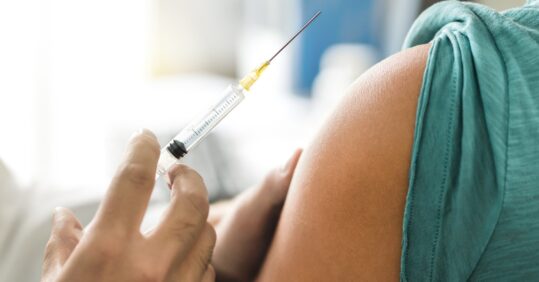


Nurses have ‘a key role to play’ in the fight against HPV-related cancers by raising awareness of vaccination and screening, according to The Eve Appeal charity.
To mark Cervical Cancer Prevention Week, the charity has revealed new survey data pointing to significant gaps in public understanding about the HPV vaccine, despite strong willingness to accept vaccination when its benefits are clearly explained.
Helen Hyndman who works as a nurse at the charity – referred to as an ‘Ask Eve’ nurse – said nurses were vital in encouraging patients to get vaccinated and attend regular screenings to help detect high-risk HPV, which causes the majority of cervical cancers.
‘The HPV vaccine is a safe and effective way to prevent HPV-related cancers, particularly cervical cancer. Evidence has shown that it prevents around 90% of cervical cancer cases,’ Ms Hyndman told Nursing in Practice.
‘As nurses, we have a key role to play in raising awareness of the vaccine, supporting catch-up programmes and emphasising the importance of attending regular cervical screening when invited,’ she said.
Related Article: Health services urged to ‘be prepared’ as red heat-health alert issued
Willingness for vaccination
A survey of more than 2,000 people, conducted by YouGov and commissioned by gynaecological cancers charity, The Eve Appeal, found that around three in four people (77%) would be willing to get a vaccination to help reduce the risk of six different cancers if they were eligible.
Among 18–24-year-olds, willingness was even higher, with four in five (80%) saying they would accept a vaccine that reduced the risk of six cancers.
However, only half (51%) of total respondents said they would get the HPV vaccine if they were eligible.
Significant knowledge gap
The findings show a clear knowledge gap, with only half of those surveyed (51%) aware that HPV can cause cervical cancer.
Awareness of HPV’s role in other cancers was even lower, with around one in three aware of links to vulval (30%) and vaginal (36%) cancers, around one in five aware of links to anal (20%) and penile (21%) cancers, and just 8% were aware that HPV can cause head and neck cancers.
The HPV vaccine is routinely offered to children aged 12 to13 through the school vaccination programme, as it is most effective before any sexual contact.
A free NHS catch-up programme is available via GP surgeries for those who missed the vaccine at school up to the age of 25, and up to 45 for certain higher-risk groups.
Recent NHS England data shows that in the 2023/24 academic year, 76.7% of girls and 71.2% of boys were vaccinated against HPV by Year 10.
Related Article: Needle-free adrenaline treatment approved for young children
However, it is estimated that 90% coverage by age 15 is needed to eliminate cervical cancer in the UK.
The NHS and government have committed to this ambition through the Cervical Cancer Elimination Plan, with a target of elimination by 2040.
Evidence already demonstrates the impact of vaccination. In England, cervical cancer rates have fallen by around 90% among vaccinated cohorts, while in Scotland there has not been a single case of cervical cancer in women who were vaccinated through the schools programme introduced in 2008.
HPV is a very common virus, transmitted through skin-to-skin sexual contact, and four in five people will acquire it at some point in their lives.
In most cases it is cleared by the immune system, but persistent infection with high-risk strains can lead to cancers of the cervix, vagina, vulva, anus, penis and head and neck.
Related Article: Addressing health inequalities in dementia care
A vital means of protection
Athena Lamnisos, chief executive of The Eve Appeal, said misconceptions about HPV remain a major barrier to prevention.
‘HPV is too little known or understood as a virus or as a cancer prevention vaccination,’ she said.
‘There are many myths – that it only affects women, or that it’s linked to promiscuity. The reality is that anyone, whatever their gender or sexual history, can be affected.’

See how our symptom tool can help you make better sense of patient presentations
Click here to search a symptom