
Health visitor training to support healthy relationships between parents and babies
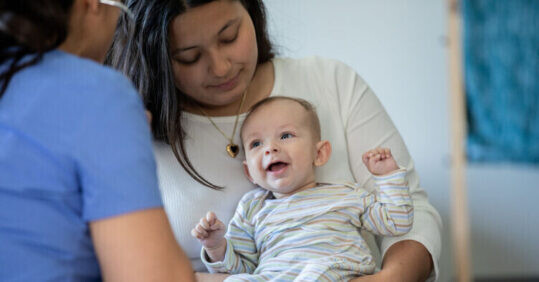


The Institute of Health Visiting (iHV) has partnered with a leading children’s mental health charity on a new workforce development programme which recognises the key role of health visitors in promoting healthy and nurturing relationships between babies, and their parents and carers.
The new training programme for health visitors, developed in partnership with Anna Freud and commissioned by The Royal Foundation Centre for Early Childhood, was announced during a visit to the Anna Freud Centre last week by its patron, Her Royal Highness the Princess of Wales.
While the project is currently in the very early stages, with the curriculum being developed at the moment, the iHV said it would likely be rolled out to health visitors later next year.
The move is hoped to enhance the vital role health visitors play in helping parents and carers build nurturing early relationships with their babies.
Related Article: Adult social care vacancies fall to decade low as registered nurse numbers rise
Drawing on the Centre for Early Childhood’s Shaping Us Framework, scientific evidence, and insights from parents and professionals, the training will focus on improving support for families facing complex challenges.
The aim is to ensure that babies receive timely, coordinated interventions that lay the foundations for positive lifelong outcomes.
During a workshop at the Anna Freud Centre on Thursday 27 November, the Princess of Wales met parents and carers who have contributed to shaping the programme. The session was co-facilitated by Hilda Beauchamp, iHV’s perinatal and infant mental health lead.
Commenting on the programme Ms Beauchamp said: ‘Health visitors and their teams are committed to making a difference for all babies, children and families.
‘We are excited to collaborate with the team at Anna Freud to develop this new programme that will further develop health visitors’ knowledge and experience in effective relationship-based practice.’
Listening to families
Ms Beauchamp stressed the need to ‘listen’ to what families need from services, and to ensure babies’ voices ‘are acknowledged and acted upon’.
‘We know families want to have trusted relationships with their health visitors so that their individual circumstances, experiences, cultural and faith backgrounds are understood well.
‘This strongly influences the way they get the help they want, when they need it, and ultimately will ensure that services work well together for everyone,’ she noted.
Related Article: ICN warns too many nurses remain concentrated in hospitals
The initiative builds on an existing partnership between iHV and the Centre for Early Childhood to advance understanding of babies’ social and emotional development.
This includes the introduction of the Alarm Distress Baby Scale (ADBB) into universal health visiting practice, with the second phase of research scheduled for completion in March 2026.
Professor Eamon McCrory, chief executive of Anna Freud, said: ‘Good mental health is grounded in relationships, whether that’s with parents, friends, teachers or other professionals.
‘Strengthening these bonds is essential for protecting wellbeing and preventing mental health problems in children and young people.
Related Article: District nursing teams seeing ‘diluted’ skill mix
‘From providing more mental health training to professionals working with young people, to creating more opportunities for connection within schools and communities, we can create the conditions to help every single child, no matter their background, thrive.’
Last month, the iHV published new guidance to support parents and carers with toilet training. The training included advice on how to progress training or support babies and children with special educational needs and disabilities.
In July, Alison Morton, iHV chief executive, stressed the role of health visitors in improving childhood vaccination uptake and preventing poor child health.

See how our symptom tool can help you make better sense of patient presentations
Click here to search a symptom