Conversations on developing national GPN school ongoing


The nurse leaders behind a regional general practice nurse (GPN) school have said they are continuing to have high level conversations around the need for a national programme to support new nurses into general practice.
The GPN Foundation School in Staffordshire launched in 2023 to help standardise training and move away from a ‘pick and mix’ of education that many GPNs face.
During this year’s Queen’s Institute of Community Nursing (QICN) conference, the school’s director and strategic nurse lead Rachel Viggars and training programme lead Gill Boast provided an update on how the initiative is working and reiterated their aims to make the scheme national.
It has always been the vision of Ms Viggars and Ms Boast that the school is replicated nationally – potentially in the form of a deanery – to remove the ‘ad hoc nature’ of recruitment and education of nurses in primary care.
Speaking today, the nursing leaders said they continued to campaign for the move to help protect the role of the GPN and to ensure safer staffing levels across the country.
They explained how they had been in conversation with England’s deputy chief public health nurse Professor Jamie Waterall and NHS England’s primary care medical director Dr Claire Fuller about the school’s potential.
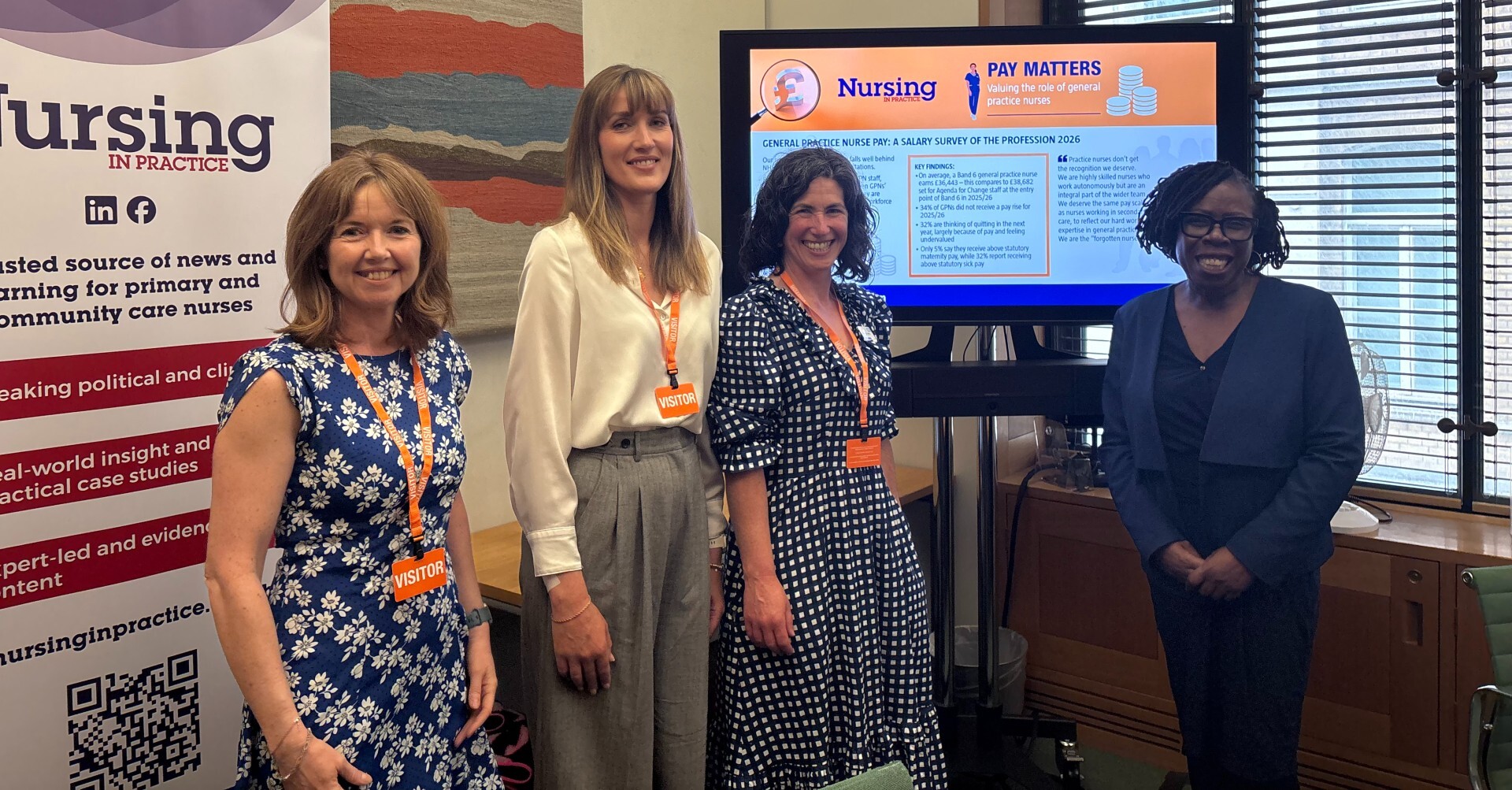
Related Article: Nursing in Practice takes general practice nurse pay concerns to Parliament
They said they had also received support from NHS England’s primary care nursing lead Louise Brady and national deputy director for community nursing and primary care Paul Vaughan.
‘We are continuing our national conversations to develop a general practice nurse school or deanery or academy or whatever you would like to call it,’ said Ms Boast.
‘We know there will be regional variation from what’s going on across the country, but we hope that a structured pathway such as the one we’ve developed, utilising that core capability framework, is really what we need.
‘We will continue to campaign for that to make sure that the general practice nurse role is not lost, and for safer staffing levels across the country.’
An independent review by the QICN earlier this year concluded that the Staffordshire school was ‘driving change’ and helping to develop a ‘national culture’ for the training and education of the GPN profession.
At today’s conference, Ms Viggars described how interest for the school had grown since its launch, with applications increasing from 54 during its first cohort to 94 in its most recent, third cohort. Each year has seen around 15/16 successful recruits – made up of newly registered nurses and those new to general practice – with a 93% retention rate.
Those on the programme attend while being employed on a full-time contract for 12 months – some via a primary care network or the additional roles reimbursement scheme and some within a GP practice. The nurses typically spend one day a week at university and half a day together as part of a fellowship day. Participants also have 26 hours of clinical time per week.
Ms Viggars highlighted the ‘many challenges and barriers’ that have long been faced by general practice nursing roles – and hence the need for the GPN school.
‘We know that our workforce is getting older and recruitment is more difficult, and the retention is even more difficult,’ she said.
Related Article: NHSE sets out instructions for trusts on Band 5 nurse role review
‘Practices we find want to replace nurses who are leaving with experienced and competent GPNs, but unless there’s an appropriate training programme in place, it’s really unrealistic.’
Ms Viggars warned the role of GPNs was being ‘fragmented’, especially with an ‘increasing role creep’ and ‘blurring of professional boundaries’.
‘We see practices using alternatives because they don’t have the option to take on a trained GPN,’ she said.
But while the practice nurse role is ‘pressured’, Ms Viggars also highlighted that it was a ‘privileged’ role at the same time.
‘We provide real continuity of care, and we’re ideally placed to focus on preventative healthcare,’ she said.
She explained that the Staffordshire GPN Foundation School was created as a ‘solution-focused approach to challenges and barriers faced during current means of GPN recruitment and retention’.
Related Article: NMC unveils ‘anti-racism’ principles for nursing practice and education
Today’s programme at the QICN conference was centred on nursing leadership in community and primary care settings.
When asked for their message to delegates as being a leader in primary care, Ms Viggars said: ‘Be ambitious and be brave. Be brave in the sense of acknowledging the challenges and the barriers, but come up with a solution and take action and do something. Because until we do, nobody else will. So, we have to take ownership for ourselves as general practice nurses and lead from the front.’
Ms Boast added: ‘I would just say, never miss an opportunity. There are lots of opportunities coming our way with the public health focus for the future. So that would be my plea. There are lots of leaders out there. We are all leaders, really, and general practice nursing could certainly take the lead.’

See how our symptom tool can help you make better sense of patient presentations
Click here to search a symptom