Nurse placement ‘barriers’ in GP practices ‘concerning’ for future workforce


Barriers to placement opportunities for nursing students in primary care and community settings will hinder the government’s plans to shift care away from hospitals, nurses have warned.
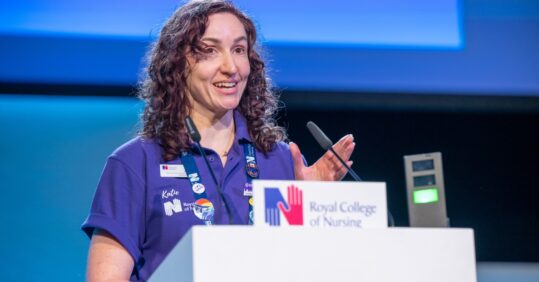
Advanced nurse practitioner in primary care Katie Brown took to the stand during this year’s Royal College of Nursing (RCN) Congress to warn of placement challenges in GP practices and other community settings, and the subsequent ‘over-reliance’ on acute settings.
Ms Brown, from the RCN Advanced Nurse Practitioner Forum, said the issue was particularly pertinent given the government’s shift to push more care into the community in line with its 10-year plan for the health service.
She cited issues around an ageing workforce within the primary care nursing workforce, as well as ‘inadequate funding’ for placement tariffs and recruitment issues.
Related Article: Report highlights impact of nature-based projects led by community nurses
‘There’s a real over-reliance on acute settings’
‘It is really missing out on the opportunities to develop and show our future workforce that this is an option for the government, where we’d love to have [nursing students],’ said Ms Brown.
‘There’s a real over-reliance on acute settings. But often it’s related to barriers in obtaining placements in primary care community and other areas, things around the variations and inconsistency [and] inadequate funding for these placement tariffs.’
She added: ‘We all know that there’s a move for services to generally move over to community-based and integrated care, so we know there’s a need to expand in these services, but often there’s challenges there within primary, social care and also the independent sector as well.’
Also joining the discussion was student nurse Lisa Jameson of the RCN’s Lancashire West branch, who also warned of a lack of nursing placement opportunities in general practice and community settings.
‘Some students are lucky to receive a wide range of placement settings, while others reach final stages of training without exposure to key areas of nursing practice, including primary care and community settings.
‘At a time when we are encouraging recruitment into community and general practice nursing roles, it is concerning that some students may complete training without ever experiencing these environments in practice.’
Related Article: MenB jab uptake in babies increases but ‘significant’ variation for MMRV, early data shows
‘We need to respect community placement opportunities’
Mary Birchard, South East Student Committee member, led the debate and discussed the impact of pressures in services on clinical placements.
‘Health and social care services are under immense pressure, and an indirect consequence of this is often reduced quality of clinical placements and learning for preregistration students, often our supernumerary status is undermined, and we fill staffing gaps, and at times this leads to inconsistent supervision,’ she warned.
She agreed with other nurses in the debate that placement opportunities in primary care, community and social care settings influence where nurses choose to go on to work.
‘If we’re planning to move into the community, we need to be respecting those areas in our clinical placement experiences,’ said Ms Birchard.
Related Article: Hundreds of new nurses and midwives not offered NHS roles due to lack of vacancies
‘I can’t have every placement in an acute trust and then choose to move into the community because I would have never experienced it.’
The motion – that this meeting of RCN Congress urges the RCN to work with all relevant bodies to develop a framework to ensure consistent standards for high quality clinical placements – was passed by voting members.

See how our symptom tool can help you make better sense of patient presentations
Click here to search a symptom