Practice nurses are not being paid their ‘value and worth’, says RCN chief
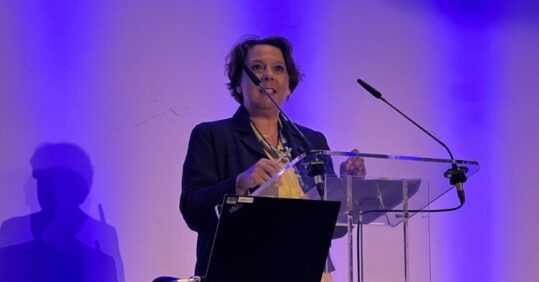


Nurses working across general practice are not being paid their ‘worth and value’, the chief executive and general secretary of the Royal College of Nursing (RCN) has warned.
Professor Nicola Ranger used a keynote address at today’s Nursing in Practice London event to assure nurses that the RCN continues to campaign for fair pay and conditions across the profession, regardless of where they work.
Her comments came alongside the launch of Nursing in Practice’s new General practice nurse pay: A salary survey of the profession 2026 report – of which Professor Ranger welcomed as an important publication.
The report – unveiled at today’s event at the Business Design Centre – revealed that practice nurses are earning thousands of pounds less than those in secondary care on Agenda for Change (AfC) terms.
Based on a survey of almost 900 nurses across general practice, the analysis explores basic pay and salaries, annual pay uplifts, pensions, employment benefits, the additional roles reimbursement scheme and more.
Informed by expert advice and opinion, including from the RCN and the Doctors’ Association UK, the findings point to a widening gap between the contribution of general practice nurses (GPNs) and how they are recognised and rewarded.
Related Article: Report highlights impact of nature-based projects led by community nurses
Addressing a room of nurse attendees this morning, Professor Ranger said she recognised that for GPNs, ‘pay is a significant issue’, with varying benefits when compared to colleagues working in the NHS on AfC.
‘Now I know that when it comes to your pay – and I’m absolutely delighted with the survey that Nursing in Practice did – and we hear it at the RCN, that particularly our GPNs and our community nurses and independent nurses, you are not being paid your worth and your value,’ she said.
‘I know you’re not on AfC and I think the terms and conditions around AfC are second to none… which is not afforded to you in GP practice.’
She said this issue would ‘hold back’ the government’s plans to shift care from hospital and into community and GP practices.
‘Pay is a really significant issue,’ added Professor Ranger.
The salary survey report suggested almost a third (32%) of nurses in general practice are thinking of quitting in the next year, largely because of concerns around their pay and because they feel undervalued.
It also shines a light on the number of nurses that continue to go without an annual pay uplift in general practice and offers insight on how GPNs can negotiate their pay with their employer.
Professor Ranger highlighted the difficulties faced by GPNs who may find it ‘awkward and difficult’ entering negotiations with their employer about pay, often complicated by the fact that that same person is also a colleague.
‘When you’re a GPN in a general practice and your employer is also your GP, as well as a colleague and a leader of the practice, it’s so difficult to talk about money and you feel a bit awkward,’ she said.
Professor Ranger urged the government to address pay for GPNs, telling the audience: ‘I think unless this government recognises [this issue], all of [their] dreams are going to be pie in the sky.’
Last month, the Department of Health and Social Care (DHSC) confirmed to Nursing in Practice that salaried GPNs would be entitled to a 3.5% pay rise for 2026/27.
Related Article: MenB jab uptake in babies increases but ‘significant’ variation for MMRV, early data shows
However, it is typically down to GP practices to pass on pay rises to practice staff following an uplift to the pay element of the GP contract. Surveys by Nursing in Practice have shown in recent years that many GPNs miss out on annual uplifts, because funding for their pay and conditions is not ringfenced in the same way that it is for GPs.
‘Huge pressure’
During her address, Professor Ranger also acknowledged that primary care and community nursing is ‘under huge pressure’ due to the lack of investment in the workforce.
‘Primary, community nursing – you matter. We matter as a profession, and I think it’s really important that we do take time to remember that we are, at the moment, under huge, huge pressure,’ she said.
She added that the current corridor care crisis across hospitals was a ‘symptom’ of ‘failing primary care’.
‘Not because the people are failing, but because the lack of investment and the lack of infrastructure. This absolutely has to be sorted,’ she said.
This comes after the chief executive told the government at a health and social care committee in March that greater ‘energy and focus’ is needed into care delivered outside of hospital settings to help eliminate corridor care.
Professor Ranger concluded her speech today by warning that nursing ‘is under threat’, urging that now was the time for the profession to ‘be active’.
Related Article: Hundreds of new nurses and midwives not offered NHS roles due to lack of vacancies
She said: ‘It is time for us to really evaluate and think about the value of what we do as nurses, because I genuinely feel our profession is under threat, and it is time for us to stand up and be counted.
‘We are the most trusted profession, but we are the least valued. Now is our time… we need to be active. We need to be bold and proud… we want you to be the bold and brilliant nurses that you are.’

See how our symptom tool can help you make better sense of patient presentations
Click here to search a symptom