What we know about the NMC registration fee increase so far


The annual registration fee for the Nursing and Midwifery Council (NMC) will increase from £120 to £143 for the first time in 11 years. Council members voted to approve the £1.92 per month rise at a meeting on 28 April.
The regulator has said it is in an ‘unsustainable financial position’ and pushed ahead with the fee rise despite strong opposition from registrants.
Nursing in Practice explores the timeline behind the fee increase, the reaction from nurses, and when the increase will come into effect.
When did the NMC announce a potential fee increase and why?
It was exclusively revealed by Nursing in Practice in October 2025 that the NMC was set to propose an increase to the registration fee for the first time in a decade.
It was later confirmed that its governing council had greenlit a public consultation on these proposals.
The regulator said its workload has ‘grown significantly’ over the 10-year period.
The number of professionals on the NMC’s register has increased by 24% over this time, from 686,782 in 2015 to 867,935 today.
At the same time, fitness to practise (FtP) referrals have also risen by 21% since 2015.
The NMC said that increasing demand for its services, alongside investment in improvement programmes, have both been paid for using NMC reserves.
It said its reserves have fallen from £101m in March 2024 to around £49.6m now and are projected to fall to £15.9m in March 2027 without a fee increase.
When speaking exclusively to Nursing in Practice NMC chief executive and registrar Paul Rees said the NMC needs to make sure its work is ‘sustainable’.
Was there a consultation?
A public consultation took place for 12 weeks from 3 November 2025 to 26 January 2026. It was completed by 40,461 respondents.
Related Article: A year in review: What did 2025 bring for nurses?
There were also four focus groups with registered professionals and two with nursing and midwifery students.
A majority of respondents (81%) disagreed that the proposal was reasonable, with over 63% strongly disagreeing.
In focus groups, participants acknowledged that the proposed increase was ‘affordable in isolation’ but felt unreasonable at this time given the high cost of living.
Respondents were also asked about the NMC’s plans for future investment. While the majority agreed with the investment areas, such as training and education, many said these areas were ‘business as usual’ and queried why additional investment was necessary.
The NMC reported in recent council papers that, more broadly, the responses ‘revealed a low understanding of the regulators role and function’ with participants in focus groups ‘struggling to see tangible benefits for their registration fees’.
Some respondents also felt that they were being asked to pay for past shortcomings at the NMC.
Health union Unison also launched a survey earlier this year which was completed by more than 3,000 registrants.
It found that more than a third of nurses and midwives would ‘reconsider’ renewing their NMC registration if the increase went ahead, with 6% saying they would ‘definitely’ not renew.
What was the reaction from registrants?
As well as the majority of respondents to the consultation disagreeing with the fee rise, healthcare professionals took to social media to express their frustrations.
Responding to the NMC’s social media post about the proposal last week, one Facebook user said: ‘What was the point in the consultation? Considering you’ve stated there was strong opposition to an increase, this just feels like it was a tick box exercise and you aren’t listening to your members.
‘Wages aren’t going up, yet everything else is. To support your members, you should be looking at a decrease if anything.’
During the council meeting to discuss the fee rise on 28 April, Unison’s assistant national officer Sarah Gilroy reiterated the health union’s survey revealing that many nurses and midwives plan to leave the profession if the fee went ahead, and asked the council how they planned to manage this.
Mr Rees said it was a ‘very serious point’ but readdressed the regulator’s financial concerns and need to increase the fee.
What is the fee rise?
| Fee Type | Registrants | Current Fee | New Fee |
| Initial registration application fee | Overseas applicants | £153 | £182 |
| Retention fee (paid annually on the 1st and 2nd anniversary of registration) | All | £120 | £143 |
| Initial registration application fee | UK Applicants | £120 | £143 |
| Renewal fee (paid at the end of the registration period on the 3rd anniversary). | All | £120 | £143 |
| Evaluation fee (to evaluate international qualifications and assess eligibility to apply for registration) | Overseas applicants | £140 | £167 |
| Application fee for entering an additional preregistration qualification | All | £23 | £27 |
| Application fee for entering on the register a recordable qualification (post-registration qualifications) | All | £25 | £30 |
| Application for readmission or restoration to the register | All | £120 | £143 |
The NMC said registrants may be able to reduce the effective cost by claiming tax relief, bringing the annual cost down further, and that quarterly payment option remains available to help spread the cost throughout the year.
What will the money be spent on?
The NMC says the fee will be used to ‘invest in critical change and improvement programmes’.
Though a specific schedule has not been planned out, Mr Rees told the council meeting that reserves have been used to pay for FtP cases as well as regulatory services.
There were also plans in the consultation to use the money for investment purposes in areas such as education, clear professional standards, regulatory fairness, and modern digital upgrades.
Related Article: The life-saving work of LD nurses in general practice
Lay council member Anna Walker asked before the fee was officially approved if the NMC would be ‘absolutely clear’ and ‘accountable’ on how the money is being spent.
Chair Ron Barclay-Smith reassured her that it would be transparent to registrants on how the money is spent.
What would have happened if the fee was not approved?
NMC’s financial leader Chris Kinsella said, if the fee was not approved, the regulator’s reserves would have been ‘adequate’ for now but would be predicted to fall to £4m by 2027 to 2028.
He told the council meeting that long-term plans would need to have been made ‘immediately’ before it reached that point.
‘It would have to be addressed at the earliest stage. It would need to be dramatic, immediate action,’ he said.
‘If the fee levels remains exactly where it is today indefinitely, they will not be able to sustain this organisation.’
Mr Rees added: ‘If we don’t go ahead…we would have to look at stopping lots of our work. We wouldn’t be able to [complete] all our statutory duties.’
How and when was the fee approved?
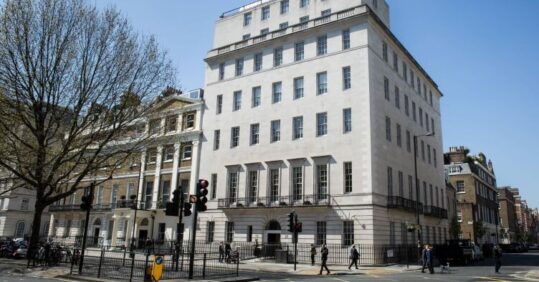
The fee was approved by council vote on 28 April at the NMC’s offices in Portland Place, London.
Following Mr Rees introducing the recommendation to approve the fee, council members were invited to discuss the plans.
Council member Flo Panel-Coates said it was ‘possibly the most difficult decision’ the council has been asked to take.
‘I recognise that this has been challenging,’ she said. ‘This is something that has been discussed in clinical practices more than anything else at the moment so it’s important we acknowledge it’s a difficult decision we’re making.’
She added that there was work to be done around informing registrants about what the NMC does, following low understanding in its consultation responses. In focus groups, participants struggled to see tangible benefits for their registration fees.
Related Article: NHS 10-year plan: What does it mean for nursing?
‘The more understanding registrants have about what do, it becomes – not excusable – but more understandable,’ she said.
When will the fee come into effect?
The new fee will come into force from 1 October 2026, subject to Parliamentary approval.
The was the expected time period put forward in October last year when the proposal to increase the fee was first announced.
Will the fee increase any further?
Concerns were expressed about how the NMC could prevent a similar decision to raise the fee in another decade’s time.
Council member Nadine Pemberton Jn Baptiste asked how the NMC could manage the fee ‘more responsibly’, a sentiment echoed by a member of the campaign group NMCWatch.
Mr Rees said: ‘Our recommendation in the future is we need smaller, more regular increases. Waiting 11 years means we’ve had to request a larger increase. This is a situation we must avoid in the future.’

See how our symptom tool can help you make better sense of patient presentations
Click here to search a symptom