Government issues guidance to explain new chickenpox vaccine to parents
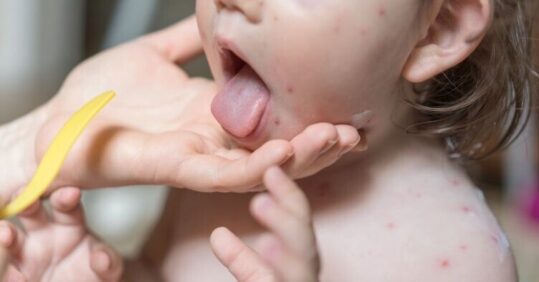


The government has issued new guidance for parents and carers of children to help them understand the introduction of the new combined MMRV vaccine, which protects against measles, mumps, rubella and chickenpox.
From 1 January 2026, all children will be routinely offered the combined MMRV vaccine, replacing the current measles, mumps, and rubella (MMR) vaccine, as part of the childhood routine immunisation schedule.
Practice nurses and healthcare professionals can give children the first dose of the MMRV vaccine at the same time as the MenB and PCV vaccinations when the child is one year old. The second and final dose is given at the age of 18 months, at the same time as the child’s fourth six-in-one vaccine.
Meanwhile, a one-dose MMRV selective catch-up programme will be delivered between 1 November 2026 to 31 March 2028 to ‘further and more rapidly reduce transmission’ of chickenpox in the population.
Related Article: NMC pledges ‘meaningful and lasting change’ following Nottingham review
The catch-up will be offered to children aged from three years four months to under six years on 31 December 2025 (date of birth on or after 1 January 2020 to 31 August 2022) with no history of chickenpox disease or two doses of varicella vaccination.
To support the changes, the UK Health Security Agency (UKHSA) has issued a guide for parents and carers of children from age 12 months up to three years and four months, outlining vaccination schedules and offering information about the vaccine, including possible side effects.
Since the MMR vaccine was introduced in 1988, cases of measles, mumps and rubella have fallen to ‘extremely low levels’, the guidance noted. The new vaccine offers the same protection as MMR, but with additional protection against the chickenpox virus, it added.
The MMRV vaccine is described in the guide as ‘a simple way to protect your child against measles, mumps, rubella and chickenpox’, with ‘a good safety record’ having been used in several countries for over 10 years.
The document highlights two vaccines which can be used and work equally well: ProQuad and Priorix Tetra. The former contains gelatine from pigs, and the latter does not. Practice nurses or GPs should discuss vaccine options with families who wish to avoid gelatine-containing vaccines and select the most appropriate vaccine for the child.
A child will be protected against measles six to 10 days after immunisation, and the mumps and rubella parts of the vaccine start to work two to three weeks after immunisation. After three to four weeks, the chickenpox part of the vaccine starts to work.
Side effects of the vaccine are usually very mild, especially after the second dose, the guide states. They may include a fever, mild rash and a lack of appetite, and the mumps and rubella vaccine may, in some cases, cause mild swelling of the face or joints. The chickenpox part of the vaccination may cause a few spots to appear, but nurses should advise parents to simply keep the spots covered and for children to continue mixing with others.
Related Article: Care minister keen to ‘explore’ single national care visa
Less commonly, around one in 1,000 children may experience a febrile convulsion in the second week after the vaccination. This is slightly more likely after MMRV than after the first dose of MMR, although the overall risk remains low, particularly when compared to the risk if the child catches one of the diseases themselves. Children who contract measles have a one in 43 chance of having a febrile convulsion. But the guidance notes that any fever in a young child can sometimes lead to a seizure and that one in 25 children will have a febrile convulsion before they turn five.
Very rarely, children may develop a rash or chickenpox-like spots over their whole body, and in this case are advised to see their GP. Encephalitis is also an extremely rare side effect occurring in one in a million children following the MMRV vaccine. This risk is significantly lower than the risk associated with measles infection itself, where encephalitis occurs in one in 200 to one in 5,000 cases.
Practice nurses and vaccine administrators should be made aware that a child has a weakened immune system, and this should be discussed with the child’s parents or carers before a vaccine is administered.
Vaccines should not be given to children who have had a confirmed anaphylactic reaction to either a previous dose of the vaccine or to an ingredient of the vaccine, such as neomycin or gelatine. If it is the latter, the child should have the gelatine-free vaccine. An egg allergy is not a reason to miss the MMRV vaccines, the guidance adds, because the MMRV vaccine is grown on chick cells, not the egg white or yolk.
Parents can be advised to make a new appointment if they missed the first one to catch up on and complete the full vaccine schedule, which can ultimately help provide lifelong protection against these four harmful diseases.
Related Article: TikToks promoting ‘dangerous’ sunscreen misinformation attract more engagement
Last month, the government unveiled key information on the implementation of the new chickenpox vaccination programme – including eligibility, funding and vaccine supply.
The introduction of the chickenpox vaccination programme was first mooted by NHS England in February.

See how our symptom tool can help you make better sense of patient presentations
Click here to search a symptom