Toddlers spending two hours a day on screens, study finds
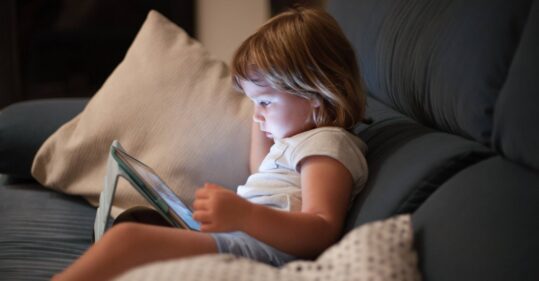


Two-year-olds in England are spending an average of two hours a day on screens, with higher use linked to poorer language development and increased emotional and behavioural difficulties, according to a major study.
The findings follow ongoing calls for government action, set out in a letter from healthcare professionals and education experts that urges stronger safeguarding around young children’s exposure to digital technology.
The Children of the 2020s study, commissioned by the Department for Education and led by researchers from University College London, analysed data from more than 4,700 parents of two-year-old children in England
Researchers found that almost all two-year-olds (98%) watched television, videos or other digital content on a typical day, for an average of 129 minutes.
This is more than double the World Health Organization (WHO) recommendation of no more than one hour of screen time per day for children aged two to four, with only 34% meeting this guideline.
Related Article: Lyme disease: what nurses need to know
Higher screen time was linked to mental health outcomes in the analysis. Two-year-olds with the greatest screen use were twice as likely to show emotional and behavioural difficulties compared with those who spent the least time on screens (39% versus 17%).
Children from families facing more challenging social and economic circumstances spent substantially more time using screens and less time engaged in activities such as reading, according to the study.
Toddlers in the lowest income households had nearly double the daily screen time of those in the highest income families, while parents in more affluent households were more than twice as likely to read to their children daily.
Children of parents reporting symptoms of depression also spent significantly longer using screens.
In contrast, frequent, stimulating interactions including reading, playing, drawing and painting were strongly associated with better language development, the researchers said.
Children whose caregivers most often engaged in these activities were able to say 74% of test words, compared with 44% among those with the least engagement.
‘A worrying impact’
Warning against the impact of screen use on young, a letter from the Digital Standards Early Years Action Group suggested that adults’ and older children’s use of mobile devices and social media is having a ‘worrying impact’ on early childhood development.
Related Article: Specialist children’s nursing workforce ‘under intense pressure’
The letter, sent on 5 December, comes from the Digital Standards Early Years Action Group, of which the Institute of Health Visiting (iHV) is a member, and calls on the government to introduce stronger safeguards and clearer guidance.
The letter to the early years minister Olivia Bailey is the second time the group has written to the government on the issue, following an earlier letter to Ms Bailey’s predecessor over a year ago.
It argues that adults’ heavy engagement with digital technology can ‘starve young children from necessary interactions that are essential to their development’ and warns that existing safeguarding protections and standards ‘have not kept pace’ with rapid technological change.
It highlights a lack of clear, evidence-based guidance for families and professionals working with children from birth to five, as well as an absence of government-led best-practice guidance on the use of digital, AI and online tools in early years settings.
Signatories are now urging a formal response and action to protect young children’s development.
Related Article: Over one million switched to combined asthma inhalers since NICE update
The lack of advice on screen-time for public health professionals was also raised in the House of Lords last month, when Baroness Joanna Penn pushed the government for information for parents and early-years providers about safe and appropriate use of digital technology by pre-school children.
‘There is no public health information for family hubs, health visitors or GPs,’ Baroness Penn noted when calling for more information in this area.
The government has been contacted for comment.

See how our symptom tool can help you make better sense of patient presentations
Click here to search a symptom