NHSE chief calls for ‘better balance’ between primary and secondary care


The chief executive of NHS England has called for a ‘better balance’ between primary and secondary care, stating neighbourhood health plans have been made ‘overly complicated’ because of a divide between the two.
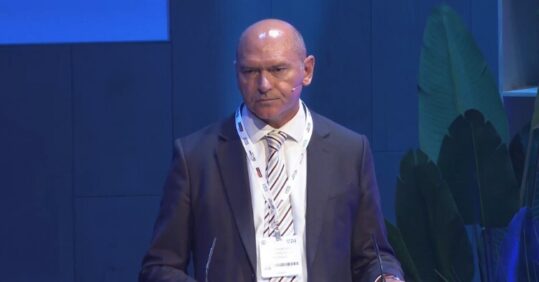
Sir James Mackey was speaking at the annual NHS ConfedExpo, being held this week in Manchester, about the importance of collaborative working across primary and secondary care.
He stressed the importance of jointly working together, directly linking it to hitting elective objectives and improving urgent care performance.
However, he stressed that neighbourhood working currently lacks ‘purpose, drive, focus and impact’ which could be resolved by better collaboration across different healthcare systems.
Under the NHS 10-year plan, the government wants to shift more care out of hospitals and into local communities, primarily through neighbourhood health services.
Related Article: GPN school struggling to find practices to host nurses
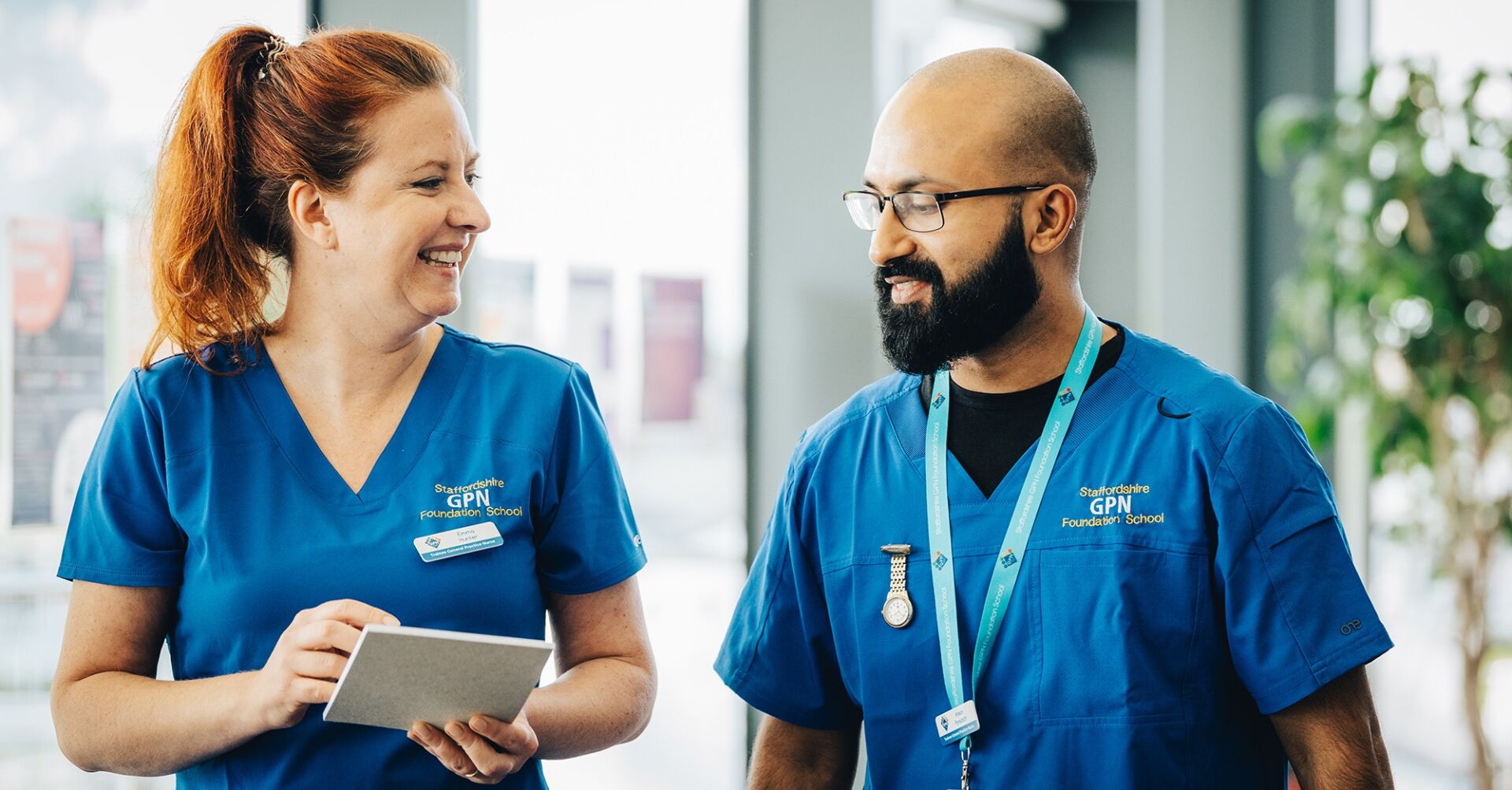
In September, it was announced that general practice nurses (GPNs) and community nurses will help make up ‘neighbourhood health teams’ across 43 services in England.
Meanwhile, the locations of the first wave of neighbourhood health centres that will open across the country were announced earlier this year.
Speaking today, Sir Mackey said: ‘[The] really odd thing that is neighbourhoods [have] massive agreement on the principle, followed by massive disagreements about how and who runs it, who owns it, and is the power in primary care or in secondary care?
‘We’ve had arguments about whether libraries should feature, whether drama therapy should feature.
‘We really made this massively over‑complicated.’
Former health secretary Wes Streeting suggested last year that nurses could lead neighbourhood health services, and that GPs could run local hospitals.
He added: ‘I think locally, people are bringing it to life. The risk is we’re not bringing it to life with enough purpose, with enough drive, with enough focus, and impact to localise services, which shift the model, which shift where care is delivered.
Related Article: Women in social care facing ‘persistent barriers’ to progress, warns Care England
‘[We need to] get a better balance of the hospital, community, primary care balance… we have to make an impact on that in the next few months.’
Mr Mackey added that primary and secondary care staff need to ‘really get organised’ working together, stating future improvement is reliant on this joint effort.
He stressed the ‘primary care vs secondary care divide’ needs to ‘stop’.
‘We’ve got to really change how our patients flow, with primary and secondary care working together to think about how we manage demand differently, and frankly, also make the same service feel like it’s more modern and more in keeping with the way people live their lives.’
He added: ‘Let’s stop all this primary, secondary care divide. The population don’t know it. They shouldn’t see it, they shouldn’t feel it, it shouldn’t be a thing anymore – it’s absolute nonsense.’
Related Article: International care workers to challenge ‘cruel’ visa changes outside Westminster
In highlighting the importance of working together, he also stressed that more patients seen in secondary care should be seen in primary care instead.
‘I would doubt there’s a hospital chief executive in the room [who] would dispute that they’ve currently got patients in their care that could be seen in the community,’ he said.
There is still time to register to attend our Community Pharmacy and General Practice Conference in Birmingham on 21-22 June 2026. The new conference, delivered in partnership with Nursing in Practice and the National Pharmacy Association (NPA), is focused on shaping the future of neighbourhood health services and shifting more care into the community.

See how our symptom tool can help you make better sense of patient presentations
Click here to search a symptom