QICN lead ‘cannot see’ how Graduate Guarantee will work in primary care


The government’s Graduate Guarantee for nursing is unlikely to work in primary care, and could deter nurses from considering practice roles as a result, Nursing in Practice has heard.
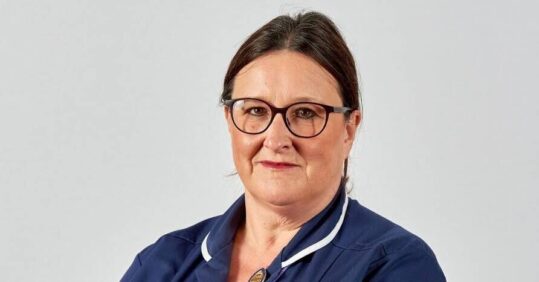
Commenting in the second edition of the Nursing in Practice Podcast, Steph Lawrence, chief executive of the Queen’s Institute of Community Nursing (QICN), said that the recently announced plan may not succeed in primary care because practices are ‘not able’ to guarantee jobs for new nurses in the same way that larger NHS organisations would be able to.
Ms Lawrence said: ‘I cannot see how the Graduate Guarantee is going to work.
Launched last month, the Graduate Guarantee encourages NHS providers to recruit newly qualified nurses before vacancies formally arise so they are able to access employment quickly after qualifying.
‘My concern is that [this] might mean that we’ll have less nurses going into primary care because there’s no guarantee for them — because primary care is not an NHS organisation,’ Ms Lawrence told Nursing in Practice.
Related Article: Report highlights impact of nature-based projects led by community nurses
However, attracting newly qualified nurses to work in community and practice nursing was needed, she said.
‘That is what we need if we are going to have more care at home, more care in the community and in general practice,’ Ms Lawrence cautioned.
Appearing on the Nursing in Practice Podcast to discuss the recruitment and retention of new nurses in primary care, Ms Lawrence outlined how ‘mandated’ preceptorship in primary care could be crucial to encouraging new nurses into general practice, and to support the delivery of the 10 Year Health Plan.
The importance of preceptorship
‘Mandated preceptorship and preceptorship that is consistent across the country is what we need,’ Ms Lawrence said.
She continued: ‘We’ve got to understand the value of the nurse role within primary care and understand the different that it makes to population health, both to individuals and within those populations.’
Preceptorship is not currently mandated within primary care, but is highly recommended by the Nursing and Midwifery Council (NMC).
In her previous role as chief nurse at Leeds Community Healthcare NHS Trust, Ms Lawrence oversaw the delivery of preceptorship across local practices and worked to standardise training for general practice nurses (GPNs).
In the podcast she recalled how this was ‘really difficult’, given how different practices ‘function in their own way as independent businesses’.
Support in general practice a ‘grave concern’
Also speaking on the latest Nursing in Practice Podcast, Angie Hack, lead of the QICNs GPN Network, echoed Ms Lawrence’s thoughts.
Related Article: Adult social care vacancies fall to decade low as registered nurse numbers rise
‘My grave concern is that there is so much disparity in the support currently available in general practices.
‘There are lots of practices; lots of GPs, who have a great understanding of the GPN role and the importance of preceptorship, but there is also a lack of support in some areas,’ she said.
The shift towards primary care is central to the government’s 10 Year Health Plan, published in July, which introduced plans for nurses to lead neighbourhood health services, some 2,000 more nursing apprenticeships, and expanded advanced practice roles, among other changes.
In December, an exclusive Nursing in Practice survey found that 28% of GPNs were considering leaving their role in the next year.
At the Royal College of Nursing (RCN) Congress in May, newly qualified nurses described choosing to work in coffee shops and looking for non-nursing posts before receiving their pin because there are ‘no jobs’ available when they graduate.
Responding to this article, a Department of Health and Social Care spokesperson said: ‘Every nurse and midwife who graduates will have job posts available to apply for across the health and social care sector, including in primary care, which will be both permanent and temporary.
Related Article: ICN warns too many nurses remain concentrated in hospitals
‘No one who dedicates themselves to a nursing or midwifery career should be left in limbo, when their skills are so urgently needed in the effort to rebuild our NHS.’
Listen to the Nursing in Practice Podcast now. The podcast is hosted on Buzzsprout and can be accessed via Spotify and Apple Music.

See how our symptom tool can help you make better sense of patient presentations
Click here to search a symptom