How has specialist dementia nursing evolved over the last 50 years?
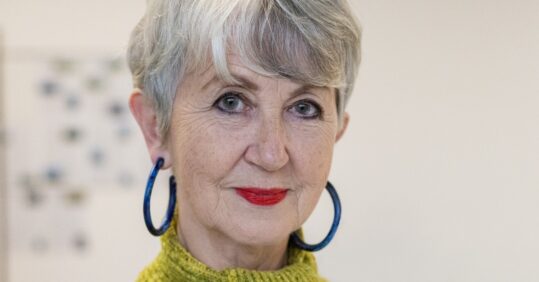


Dr Karen Harrison Dening reflects on her 50-year nursing career and how dementia care and policy have changed in that time. She explores the various strategies and approaches which she says have helped shape specialist dementia nursing today.
I retired at the end of last year from a career spanning over 50 years in nursing. I have always considered myself an ‘accidental nurse’ as had intended a career in graphic design to follow my father’s footsteps. But this was not to be as while awaiting a university place, in 1975 I became a nursing assistant (as they were called in those days) in the field of learning disabilities.
One thing leading to another, I went on to train over the next four and a half years in a combined course qualifying in learning disabilities and mental health nursing. From there in 1980 I decided I wanted to work with people diagnosed with dementia, which as a career in those days was not a popular choice but there was a part of me that wanted to champion good care for this underserved and undervalued group of people and deliver it to the best of my ability.
I was conscious from very early on that as dementia was predominantly a condition affecting older people, a sound knowledge of physical health co-morbidities was essential.
This led me to ‘top up’ my nurse education by undertaking general nurse training, now referred to as adult nursing, to complement my two existing registrations.
Having these three nursing qualifications and experience, I feel, has given me a solid grounding to working with people affected by dementia; both the person with the diagnosis and their family carers and supporters. At this point there were no specialist dementia services as dementia care was only provided in the form of institutional care within large mental health hospitals.
Related Article: We took nurse pay concerns to MPs, but what do we do next?
As is now and was then, the majority of people with dementia live in the community in their own homes yet the only community nursing they received was in respect of treatment for other conditions, such as perhaps a wound dressing or insulin administration by a district nurse.
My career route took me to manage one of the first dementia assessment wards to be established in the early 1980’s.
Over the 50 years I have witnessed a lot of changes in dementia care, much of it for the better.
From the mid-2000s, UK dementia policy evolved from a limited and fragmented awareness, both professional and public, with several policy and guidance efforts that focused on its diagnosis, care, research, and community support.
The main impetus for this was brought about from a growing sense of the rising numbers of people with dementia, both diagnosed and undiagnosed, that presented an increasing public health challenge.
This led to the first National Dementia Strategy; “Living Well with Dementia”, which in its development proposed recommendations for early diagnosis, better care pathways, and increased public awareness.
This led me to my first foray into lobbying and in trying to influence better end-of-life care for people with dementia.
This fortunately resulted in an additional recommendation, number 12, which sought to both recognise and improve end-of-life care for people with dementia. Afterall, as important as it is to live as well as possible with dementia, it is equally important to die as well as possible with dementia.
From there the Prime Minister of the time, David Cameron, launched his challenge that built on the first dementia strategy to include developing dementia friendly communities among other things, closely followed by additional challenges to set ambitions for improved diagnosis rates, workforce training, and global leadership in dementia research.
Related Article: ‘Practices can’t commit to a pay rise for nurses that they can’t afford’
A second dementia strategy was promised and despite a great deal of input from clinicians, researchers (myself included) and government stakeholders, this did not emerge.
Dementia care policy started to become subsumed in the broader policy considerations of long-term conditions, frailty and ageing, disabilities and more recently, a focus also on human rights.
I do not think this is a bad move as it is difficult to extract dementia from the other co-morbid conditions that an individual may also experience. It was Tom Kitwood that enabled us to see the person with dementia first and not the dementia as their defining condition. So, to consider the person and their individual set of social circumstances, life history and current physical health co-morbidities seems only right.
It takes me back to the time when I first wanted to work with people with dementia and equip myself to provide care to meet their wide-ranging needs and considered what education and experiences I needed to do this well. In respect of dementia policy, one thing I have learnt over the years is to be patient, take the opportunities when they do eventually come and work fast and hard when they do.
As you would expect, my retirement has led me to make many more reflections on changes I have experienced over the years in my own nursing career. I have been fortunate enough to have worked as an Admiral Nurse and have gone on to work for Dementia UK in many roles and guises for the last 20 years of my career. Admiral Nursing was first conceived over 30 years ago now and was originally a community nursing-based approach to supporting carers of a person with dementia.
Over time Admiral Nursing has evolved to work relationally with the whole family affected by dementia and in providing their services across all care settings; community nursing, acute hospitals, hospice, care homes etc., in recognition that people with dementia find themselves in many care contexts.
Part of my time has involved writing many articles and books about evidence-based practice in dementia care in support of generalist nurses who have not specialised in dementia care but nevertheless find people with dementia on their caseloads or in their wards. I have covered a wide range of issues over the years, resulting in over 200 peer reviewed journal articles, many books and book chapters.
Related Article: ‘Person-centred care must never mean placing GPNs in unsafe situations’
I can honestly say that these last 20 years at Dementia UK and as a Consultant Admiral Nurse have been the most rewarding of my career. It has been exciting to be a part of a growing ‘movement’ that aims to provide specialist dementia care nursing to all those with dementia that need it.
While retirement comes to us all, I am again fortunate in that Dementia UK has awarded me an Honorary Research Fellow (Emeritus), probably the first charity to ever do this, so perhaps I am not finished yet?
Dr Karen Harrison Dening retired as head of research and publications at Dementia UK at the end of 2025

See how our symptom tool can help you make better sense of patient presentations
Click here to search a symptom